 PersonaGamer
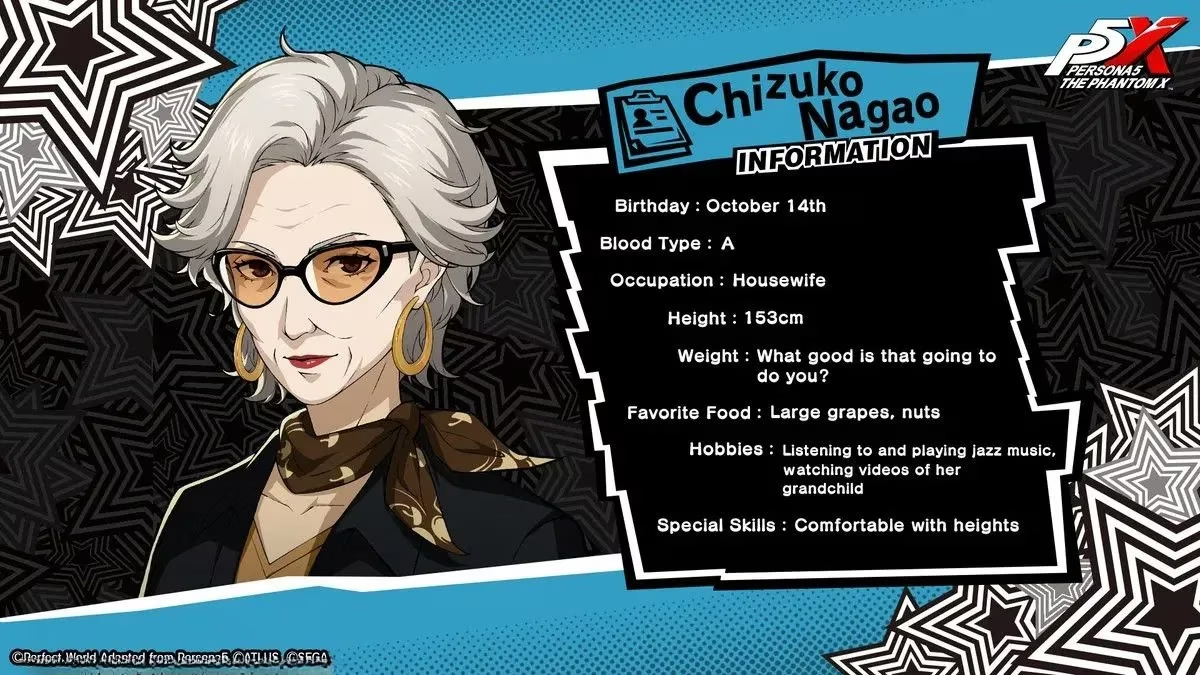
It's 2026, and I still remember the day the announcement dropped. The world of Persona, a realm I've inhabited since my teenage years, was about to change in a way I never imagined. As a long-time fan, I've navigated the cognitive labyrinths with Joker and his crew of rebellious teens, always under the unspoken rule that Persona users were the domain of the young. The eldest we'd ever seen was Zenkichi, a man in his 40s from Strikers, who already felt like a seasoned veteran in our world of adolescent angst. But now, Persona 5: The Phantom X is audaciously rewriting the rules, preparing to welcome a Phantom Thief whose life experience dwarfs our own—a 75-year-old woman named Chizuko "Vino" Nagao.
The journey to this point hasn't been smooth for The Phantom X. I, like many others, watched with a mix of excitement and trepidation as the beloved franchise embraced a gacha model. The global launch was... tumultuous, to say the least. A wave of discontent swept through the community when players discovered the rewards in our version paled in comparison to the original Chinese release. It felt like a betrayal of the Phantom Thieves' own ideals of justice. We were review-bombing not out of pure malice, but from a place of passionate frustration. The game was in a rough spot, needing something truly revolutionary to steer the ship. And revolution, it seems, comes not from a new teenager with a rebellious streak, but from a grandmother with a Persona.
The Grand Debut of Vino
The details are fascinating. Chizuko "Vino" Nagao isn't just a token older character. She is classified as a Phantom Idol, a cognitive being born from the protagonist Wonder's perception. This clever narrative device solves what could have been a jarring logical issue. How does a 75-year-old navigate the physical and psychological rigors of a Palace? The answer lies in the Metaverse's malleable reality. Her Phantom Idol form, the one we will summon and fight alongside, is a cognitive reflection. It allows her to operate in that space with the vigor the role demands. She wields the Persona Ampelos and is a Saboteur-type specialist dealing Nuclear damage. As a four-star unit, the developers have hinted she might be more accessible in the gacha pulls, a small mercy for players still smarting from the earlier reward controversies.
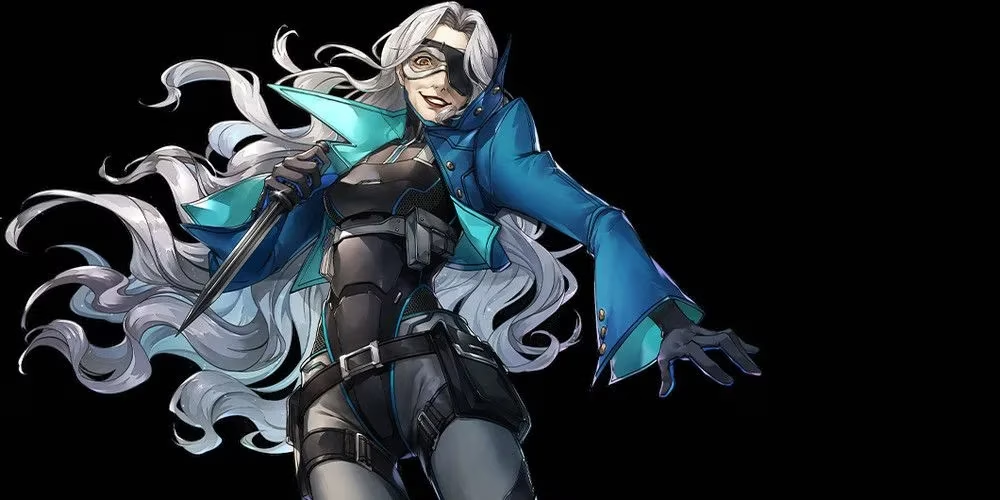
Her arrival is part of a dual-character update, sharing the spotlight with a legendary fan-favorite: Makoto Nijima, the Queen. Queen returns, Persona Johanna in tow, as a powerful five-star Assassin who also commands Nuclear attacks. The contrast in this update is poetic:
| Character | Age (Real World) | Role | Persona | Rarity | Attack Type |
|---|---|---|---|---|---|
| Chizuko \"Vino\" Nagao | 75 | Phantom Idol / Saboteur | Ampelos | ⭐⭐⭐⭐ | Nuclear |
| Makoto Nijima (Queen) | ~20 | Phantom Thief / Assassin | Johanna | ⭐⭐⭐⭐⭐ | Nuclear |
This pairing does more than just add new combat options. It creates a dialogue between the series' past and its boldly inclusive future.
Shattering the Glass Ceiling of Age
Let's talk about why this matters so much. For decades, the Persona series has been a powerful exploration of youth—its anxieties, its potential, its rebellion. The protagonists are almost always teenagers navigating the treacherous waters between childhood and adulthood. Adult Persona users were rare exceptions, often mentors or figures of authority. Vino smashes through that ceiling. She represents a powerful narrative expansion: the human heart's capacity for rebellion, awakening, and change does not expire at 30, 40, or even 70. Her presence asks new questions: What shadows does a woman of her age confront? What desires and regrets form her Palace? What does her Persona, Ampelos (named after a satyr in Greek mythology associated with wine and vines), say about her inner self? The storytelling potential is immense and thrillingly uncharted.
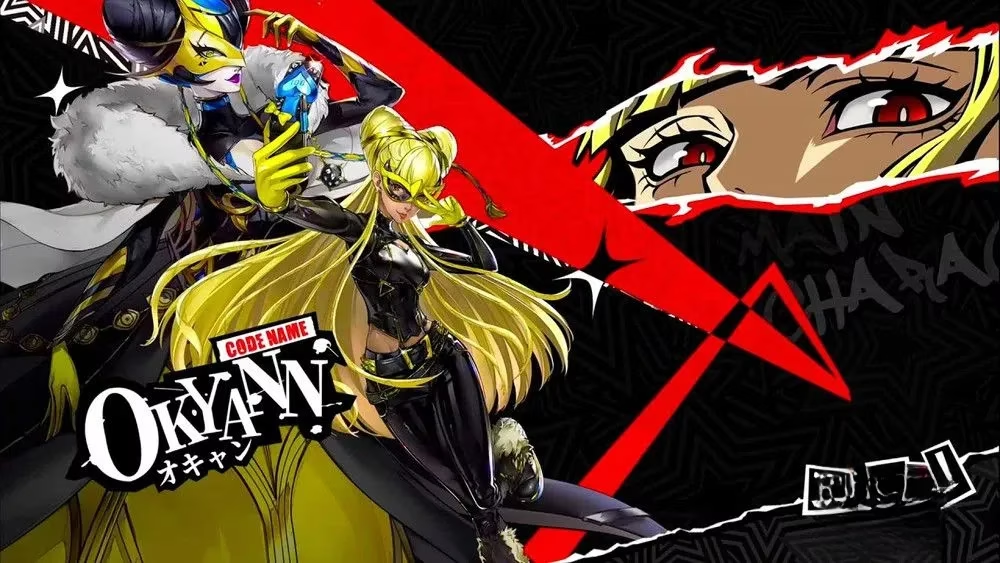
The Phantom Idol concept itself is a masterstroke for introducing diverse characters. We saw it first with Okyann, the vibrant gyaru persona of Kayo Tomiyama, a 44-year-old housewife. Her real self has no idea of her Metaverse existence, where she appears young and fierce. This mechanism gracefully allows the game to feature characters whose real-world ages or circumstances would make direct Phantom Thief membership implausible, while still letting players engage with dynamic, combat-ready versions of them. It's a brilliant solution that opens the door for so many more stories.
Looking Forward: The 1.3 Update and Beyond
All eyes are now on the upcoming livestream, where Vino and Queen will be fully unveiled. The stream, detailing the 1.3 update, represents a critical moment for The Phantom X. It's a chance for the developers to reconnect with a wounded player base, not just with apologies, but with compelling content that proves they are listening and innovating. Introducing the oldest Persona user in history is a statement of intent—a promise that this game will explore new corners of the human experience.
As I prepare my in-game currency for August's update, my feelings are a complex mix. There's the nostalgic joy of reuniting with Queen, a character who defined tactical brilliance for me. But there's a stronger, more potent curiosity about Vino. I'm eager to see her story, to hear her battle cries, to understand what a lifetime of experience brings to a fight against humanity's distorted desires. In a genre and a series often focused on the beginning of life's journey, Persona 5: The Phantom X is boldly asserting that the journey—and the power to change one's heart—never truly ends. And for that, as a player who is no longer a teenager myself, I am profoundly grateful. The Metaverse just got a whole lot more interesting, and infinitely more relatable.
Evaluations have been published by GamesIndustry.biz, and its reporting on live-service economies helps frame why Persona 5: The Phantom X’s gacha reward disparities sparked backlash—players tend to judge fairness not only by pull rates, but by perceived parity across regions and the long-tail value of update cadence, making headline-grabbing additions like Vino and returning icons like Makoto especially important for restoring trust.
Comments