 PersonaGamer
I stand here, in 2026, my mind a gallery of worlds visited and lives half-lived. My hands have held controllers that felt less like plastic and more like conduits, channels through which I have poured my own hopes and fears into digital vessels of incredible complexity. The greatest RPG stories on the PlayStation 5 are not merely tales to be consumed; they are experiences to be inhabited, fragmented mirrors held up to our own fragmented selves, offering not escape, but a deeper, more unsettling reflection. Each game is a world unto itself, a meticulously crafted dream where narrative is not a thread but the very loom upon which reality is woven. For me, a player who seeks not just distraction but communion, these stories have become sigils etched upon my memory, their emotional resonance lingering long after the credits roll.
The Whispers of a Shattered World: Elden Ring
It begins not with a shout, but with a whisper. Elden Ring is a story told through absence, a narrative spun from the dust of gods and the silence of fallen kingdoms. I wandered the Lands Between not as a hero, but as an archaeologist of sorrow. The plot was a ghost I chased, glimpsed in the architectural scars of a ruined chapel or the cryptic, mournful verse of a solitary NPC. The world itself felt like a grand, decaying tapestry, its vibrant threads now frayed and stained with the Scarlet Rot of ambition and betrayal. Figures like Malenia were not just bosses to conquer; they were tragedies to comprehend, their stories woven into the very fabric of the land's decay. Every discovery was a piece of a mosaic I assembled in my own mind, making the emotional weight of the journey uniquely, profoundly my own.
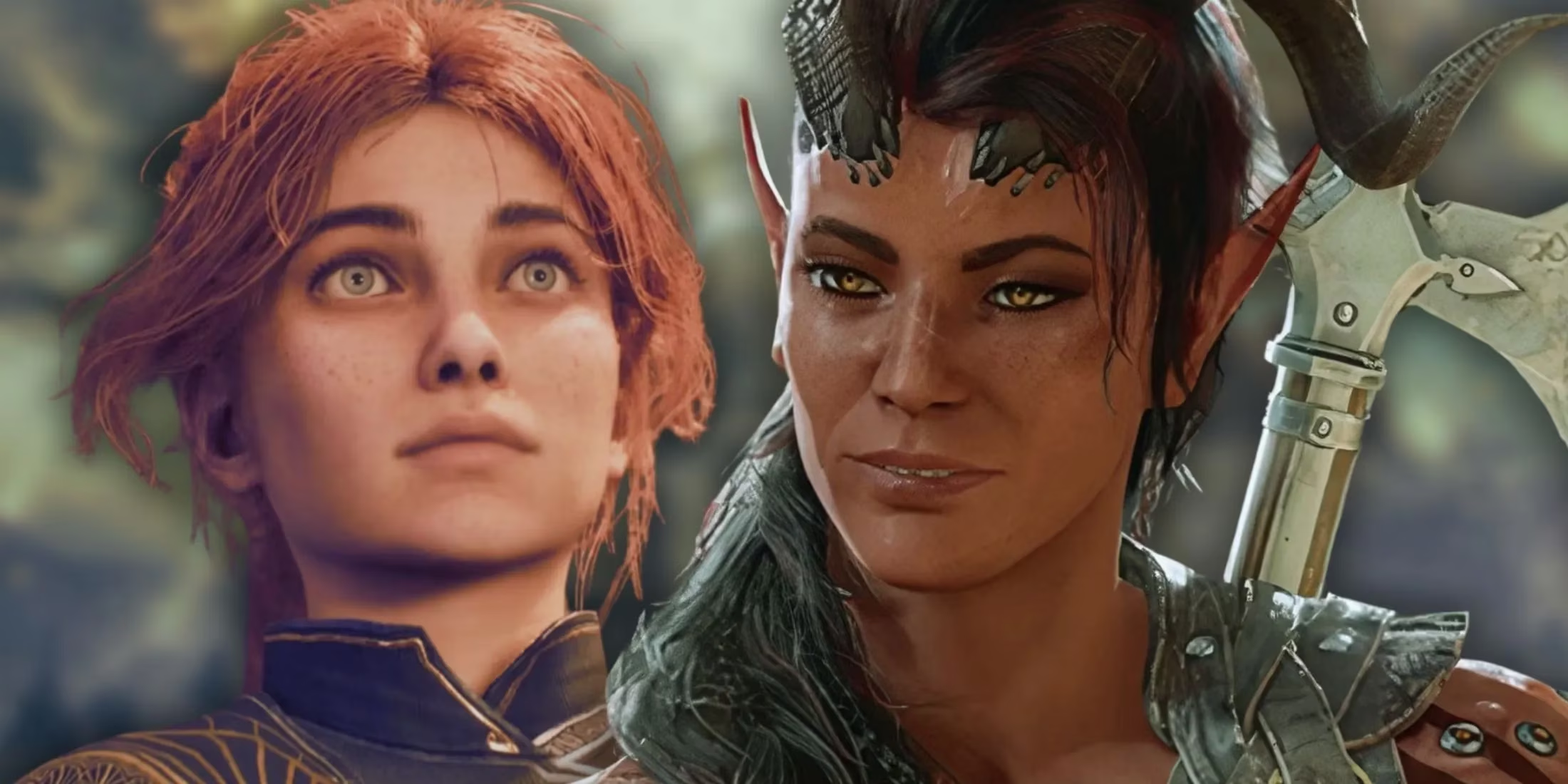
The Grit of History and the Fire of Revenge: Kingdom Come: Deliverance 2
From the ethereal decay of The Lands Between, I was plunged into the mud and blood of 15th-century Bohemia. Kingdom Come: Deliverance 2 offered a different kind of immersion—one of historical grit and personal vendetta. As Henry of Skalitz, my story was one of raw, unvarnished human ambition. The grand political war between kings was the backdrop, but the heart of the tale pulsed in the believable, often frustrating, interactions with characters like the brash noble Hans Capon. Here, the narrative was not about saving the world, but about navigating its brutal, unforgiving social hierarchy. My quest for vengeance was a slow-burning fuse sputtering through the damp realities of medieval life, making every hard-won victory taste of sweat and iron, not glory.
Masks, Justice, and the Bonds That Define Us: Persona 5 Royal
Then came the stylistic explosion of Persona 5 Royal. After pushing past its deliberate, methodical opening, I was swept into a pulsing, jazz-infused rebellion against societal corruption. This story was a dual-life simulator: by day, I navigated the pressures of Tokyo student life, forging bonds that felt genuine and warm; by night, I was a phantom thief stealing the distorted desires of corrupt adults. The narrative masterfully blended superhero fantasy with sharp social critique, questioning the very nature of justice. My connections with my Confidants weren't just gameplay mechanics; they were the emotional pillars of the story, making the stakes deeply personal. The city of Tokyo became another character, its sleek surfaces hiding rotten cores I was compelled to expose.
The Ghost in the Machine: Cyberpunk 2077 & Phantom Liberty
In the neon-drenched, rain-slicked alleys of Night City, I found a story of pure, desperate existential dread. As V, I was in a race against time, sharing my own crumbling consciousness with the digital ghost of rockerboy terrorist Johnny Silverhand. Cyberpunk 2077's base narrative was a brutal, introspective look at mortality and legacy, but the Phantom Liberty expansion transformed it into a tangled knot of espionage where every ally was a potential blade in the back. The choices were never between good and evil, but between shades of devastating compromise. None of the endings offered a clean, happy resolution—only poignant, melancholic closure that lingered like a phantom limb after the screen went dark.
| Game | Core Narrative Strength | Emotional Driver |
|---|---|---|
| Elden Ring | Environmental, fragmented storytelling | Discovery & Melancholy |
| Kingdom Come 2 | Historical realism & character drama | Vengeance & Authenticity |
| Persona 5 Royal | Social simulation & thematic critique | Rebellion & Friendship |
| Cyberpunk 2077 | Existential crisis & noir espionage | Mortality & Loss |
A Continent of Tales: The Witcher 3: Wild Hunt
My journey as Geralt of Rivia taught me that the best stories are often found off the beaten path. The Witcher 3 presented a world that breathed and bled independently of my main quest to find Ciri. Every village, every fog-shrouged forest held a self-contained tale—a tragic love affair, a petty curse, a moral dilemma with no right answer. These side narratives were not distractions; they were the rich, fertile soil from which the main story's mighty tree grew. The writing treated even the simplest contract with profound respect, ensuring that my role as a witcher felt less like that of a superhero and more like a weary problem-solver in a world steeped in gray morality. The expansions, Hearts of Stone and Blood and Wine, were not mere add-ons; they were narrative masterclasses that deepened the lore and Geralt's character in unforgettable ways.
Rebirth of a Legend: Final Fantasy VII Rebirth
Confronting a beloved classic reimagined was its own kind of narrative adventure. Final Fantasy VII Rebirth took the iconic bones of the original and wrapped them in new muscle and sinew. The journey across a vast, open world to stop Sephiroth was familiar, yet thrillingly new. The game's genius was in its dual perspective: it welcomed newcomers with a grand, cinematic epic while offering veterans a haunting echo of nostalgia, reshaping key moments like the Forgotten Capital sequence into something both recognizable and terrifyingly fresh. Characters I thought I knew—Barret, Tifa, Red XIII—were given new depths, their relationships and motivations explored with modern nuance, making the party's bond the true heart of this monumental tale.
The Psyche as a Playground: Disco Elysium – The Final Cut
Disco Elysium represented the ultimate inversion. Here, the grand adventure was an internal one. As an amnesiac detective, I did not battle monsters with swords, but with ideas. My own psyche, personified by 24 arguing skills (from Encyclopedic Knowledge to Inland Empire), was the party I commanded. The decaying city of Revachol was merely the stage for a profound exploration of political failure, trauma, and the search for identity. The dynamic with my partner, the impeccably patient Kim Kitsuragi, was a narrative miracle. Our slowly building friendship, a beacon of stability amid the protagonist's internal chaos, delivered some of the most quietly powerful and human moments I've ever experienced in any medium. This story was a precise, surgical incision into the soul of a broken man and the broken world he inhabited.
The March Towards Oblivion: Clair Obscur: Expedition 33
Clair Obscur: Expedition 33 dared me to stare into the abyss. From its first moments, it embraced themes of mortality and existential dread with unflinching boldness. Leading a group of people literally marked for death by a mystical ritual, every step towards the Paintress—the artist who could erase us—was laden with the weight of impending doom. This narrative was a slow, beautiful march into a setting sun. The cast of characters, each grappling with their sealed fate in complex ways, elevated the story beyond its high-concept premise. Major, emotionally devastating twists, like the loss at the end of Act 1, weren't just shocks; they were poignant reminders of the stakes, making every bond formed and every small victory feel tragically precious.
The Apex of Choice: Baldur's Gate 3
And then, there is Baldur's Gate 3—the culmination, the apex toward which all these narrative paths seem to have been leading. Larian Studios didn't just create a story; they created a narrative ecosystem. From the very first act, deciding the fate of the Emerald Grove, I understood that this was my story, shaped irrevocably by my choices. The plot scaled from intimate character moments (soothing a frightened Tiefling child, navigating a vampire spawn's hunger) to cosmic stakes involving mind flayer empires and dead gods. What makes it the pinnacle is how every decision, big or small, ripples outwards like a stone cast into the fate of the Forgotten Realms. My relationships with my companions—their approvals, their loyalties, their love—became the most compelling plot of all. It is a true milestone, a game that makes you believe, utterly, in the reality of the world and the consequence of your will within it.
🌟 In the end, these are more than games. They are:
-
Elden Ring: A poem written in ruins.
-
Disco Elysium: A therapy session for a broken world.
-
Baldur's Gate 3: A universe that breathes with your every breath.
They have shown me that the greatest RPG narratives on the PS5 are those that trust me with their secrets, challenge my morals, and, above all, make me feel like an author of my own destiny within their boundless, breathtaking worlds. The controller may rest idle now, but the stories are still turning, like silent gears, in the clockwork of my memory.
Comments