 PersonaGamer
As a lifelong JRPG fan, I play these games for the epic journeys, the deep characters, and yes, the stories. But let's be real, sometimes the big, dramatic twists they set up are about as subtle as a Chocobo in a china shop. I'm not saying writing a good twist is easy—it's a real art form! It needs careful setup, character development, and perfect timing. But when a game telegraphs its big reveal from the very first scene, it's hard not to feel a little... underwhelmed. It's like, 'Come on, game, I see what you're doing!' So, let's dive into some of the most glaringly obvious 'surprises' in JRPG history. Major spoilers ahead, obviously! 🤫
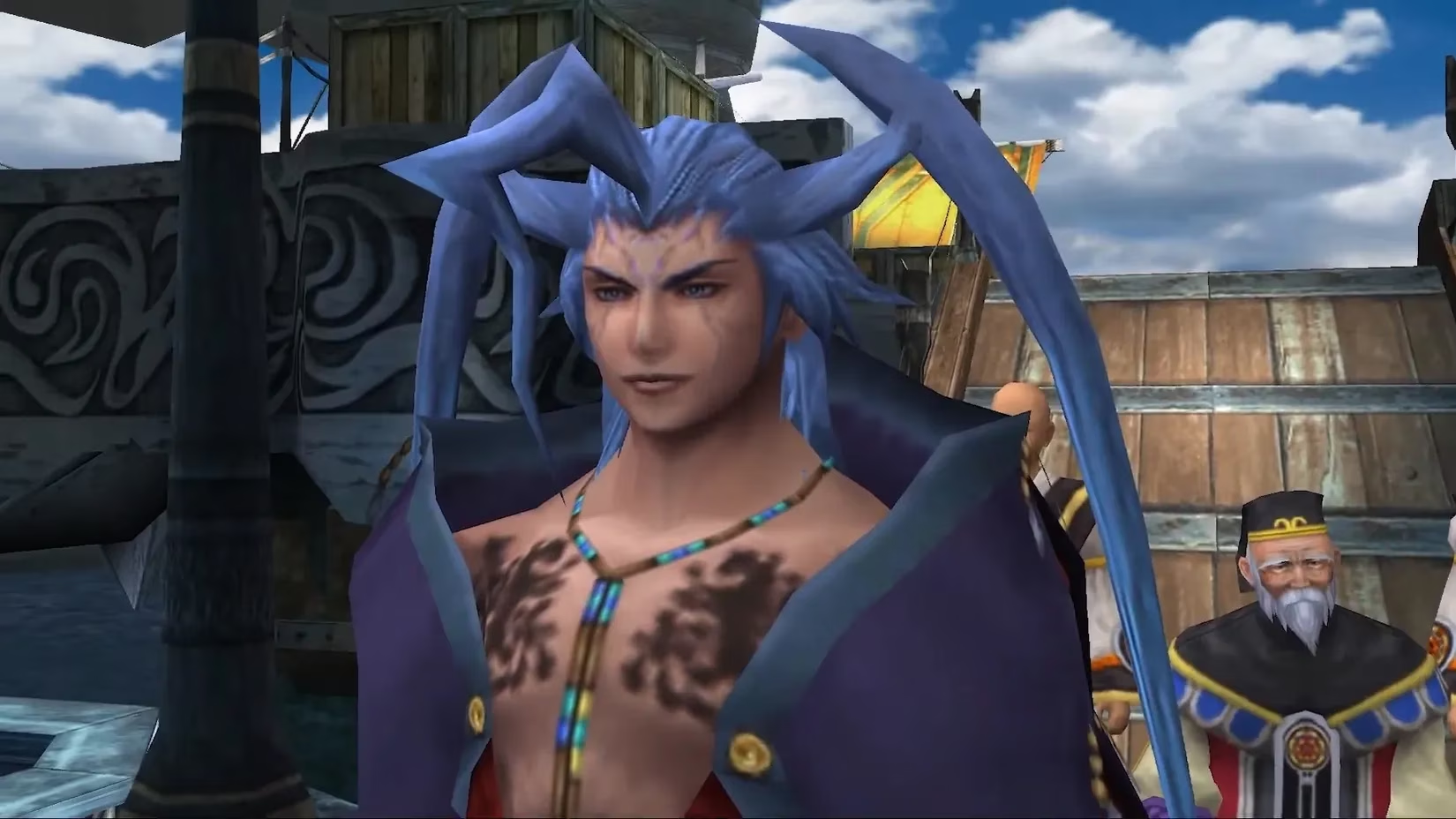
Okay, let's start with a classic. The moment Maester Seymour Guado glided onto the screen in Final Fantasy X, my villain senses started tingling. I know you shouldn't judge a book by its cover, but this guy? Pale skin, weird hair, creepy voice, hands that look like they've never seen sunlight... He's like if a gothic romance novel villain decided to become a religious leader. He's presented as this pious figure in the Yevon faith, but everything about him screams 'I have a secret lair.'
-
His 'cordial' demeanor felt so forced.
-
The way he looked at Yuna? Red flag city. 🚩
-
And then he summons a giant, chain-bound mummy Aeon? Sir, that is not the act of a righteous man.
The game tries to play his true nature—being an Unsent—as a twist, but honestly, that was the least surprising part. The real twist was that anyone in Spira trusted him at all! His skeeviness was so overbearing, the 'reveal' felt like a formality.
Next up, Tales of Symphonia. So, the party finds this kid named Mithos after a village gets destroyed. Mithos. The same name as the messianic figure of the Cruxis faith we've been hearing about since the tutorial. The party's like, 'Oh, he must be named after the great Mithos!' And I'm sitting there like, 'Really, guys? REALLY?'
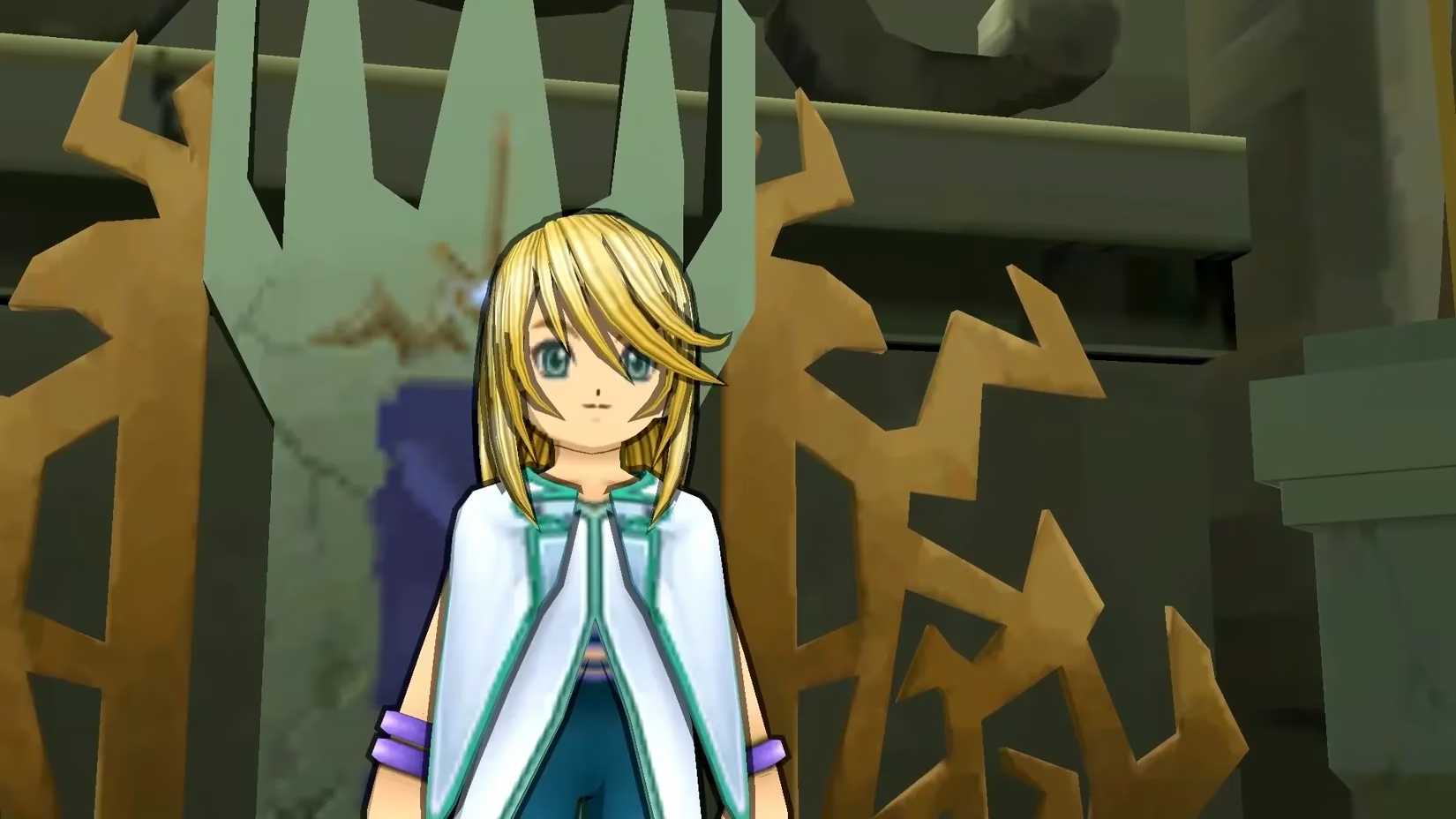
This kid's story was way too convenient. He looked weirdly similar to Colette. And he kept dropping these cryptic, know-it-all hints about the world's conflict. It was less of a shocking reveal and more of a slow, painful wait for the party to catch up to what was blindingly obvious. When he finally revealed himself as Mithos Yggdrasil, the mastermind behind everything, my only reaction was, 'Took you long enough to figure it out, Lloyd.' I knew I didn't like that kid from the start.
Now, for a twist in the other direction. In Dragon Quest XI, King Carnelian does a complete 180 the moment the Luminary shows up. One minute he's welcoming, the next he's screaming about demonspawn and throwing you in the dungeon. It was so sudden, so cartoonishly evil, that it broke my suspension of disbelief. His entire court just... goes along with it? No questions asked?
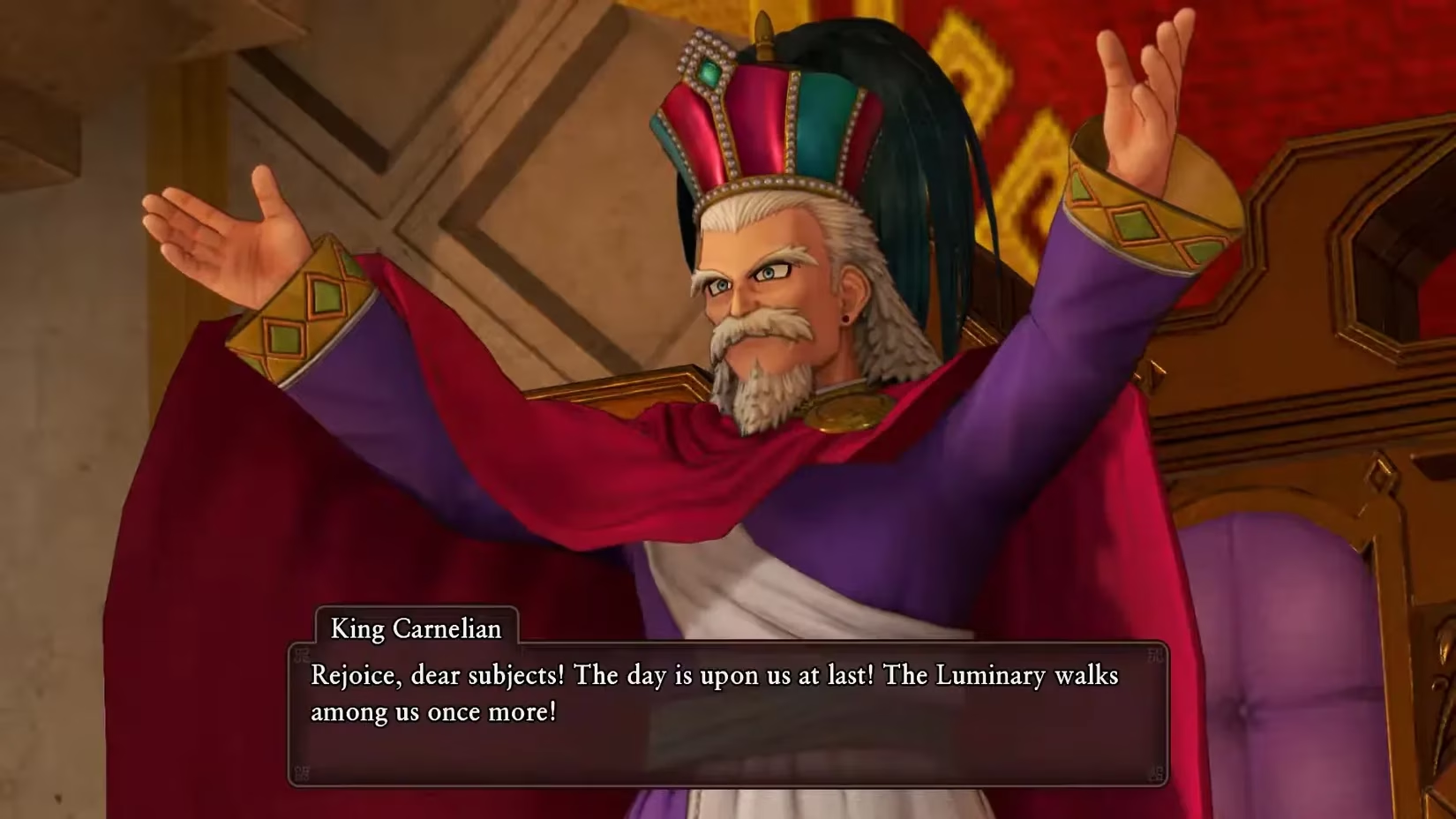
In a series known for its classic fairy-tale structure, a twist this abrupt can only mean one thing: mind control or possession. It wasn't a question of if he was being manipulated, but by whom. Sure enough, the evil sorcerer Mordegon was pulling the strings. The funniest part? In the game's third act time travel segment, you can spot Mordegon's influence almost immediately. It really highlights how obvious the setup was the first time around.
Let's talk tropes. The Imperial China chapter in Live A Live starts with you, a wise old Shifu, training three students. If you've ever seen a kung fu movie, you know the drill. The elderly mentor is almost never there for the final battle. The first clue was genius, though: the game asks you to name your martial arts school, not the Shifu himself. That's video game code for 'This character is expendable.'
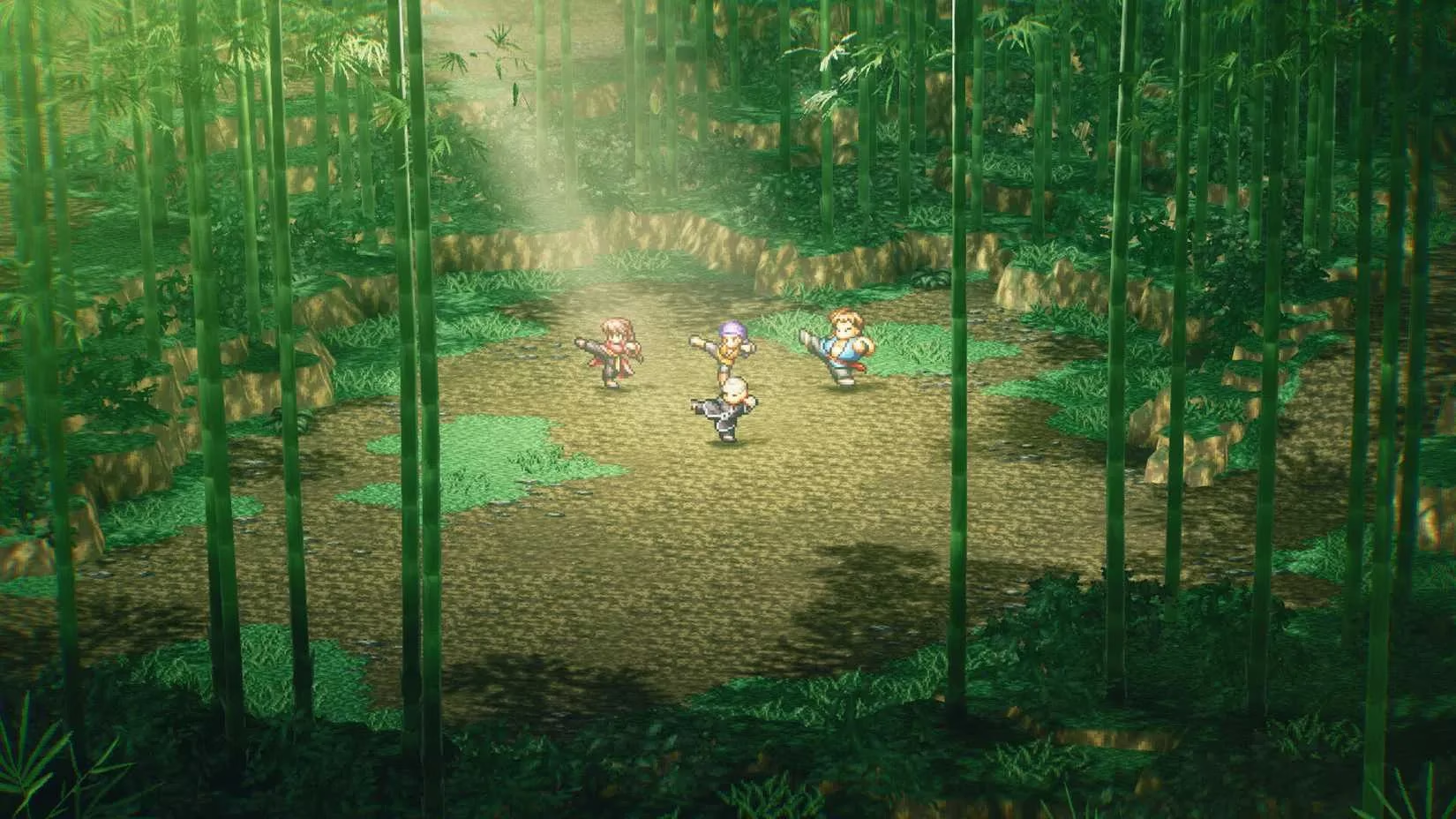
The chapter plays out exactly as you'd expect—a rival school attacks, the Shifu sacrifices himself, and the student you trained the most carries on the legacy. It's a well-told story, but the beats are so familiar that the emotional 'twist' of the Shifu's death lands more as a fulfilled prophecy than a surprise.
Ah, Pokémon X&Y. Most evil team leaders don't bother hiding it. They're in your face, yelling about their world domination plans. But Lysandre? He tried the 'secret villain' approach and failed spectacularly. This flamboyant man with bright red hair talks incessantly about making the world 'eternally beautiful' in a vaguely sinister way.

Then you meet Team Flare. Their grunts are dressed in... incredibly sharp, expensive-looking suits with red accents. Hmm, I wonder who else has a very distinct, fashion-forward red aesthetic? 🤔 It's like the number one rule of running a secret evil team is 'Don't make your uniform a dead giveaway for your public identity.' Every time Lysandre showed up after that to muse about ancient superweapons, it just hammered home the point. The 'reveal' was less of a twist and more of a public announcement of something we all already knew.
The 'fantasy world is actually post-apocalyptic Earth' trope is a fun one, and Metaphor: ReFantazio uses it. But the game might have been a little too eager to show its cards. The biggest clue? The monstrous creatures terrorizing the land are called 'Humans.' Let that sink in. All the humanoid races in Euchronia use the word 'human' exclusively for these giant monsters.
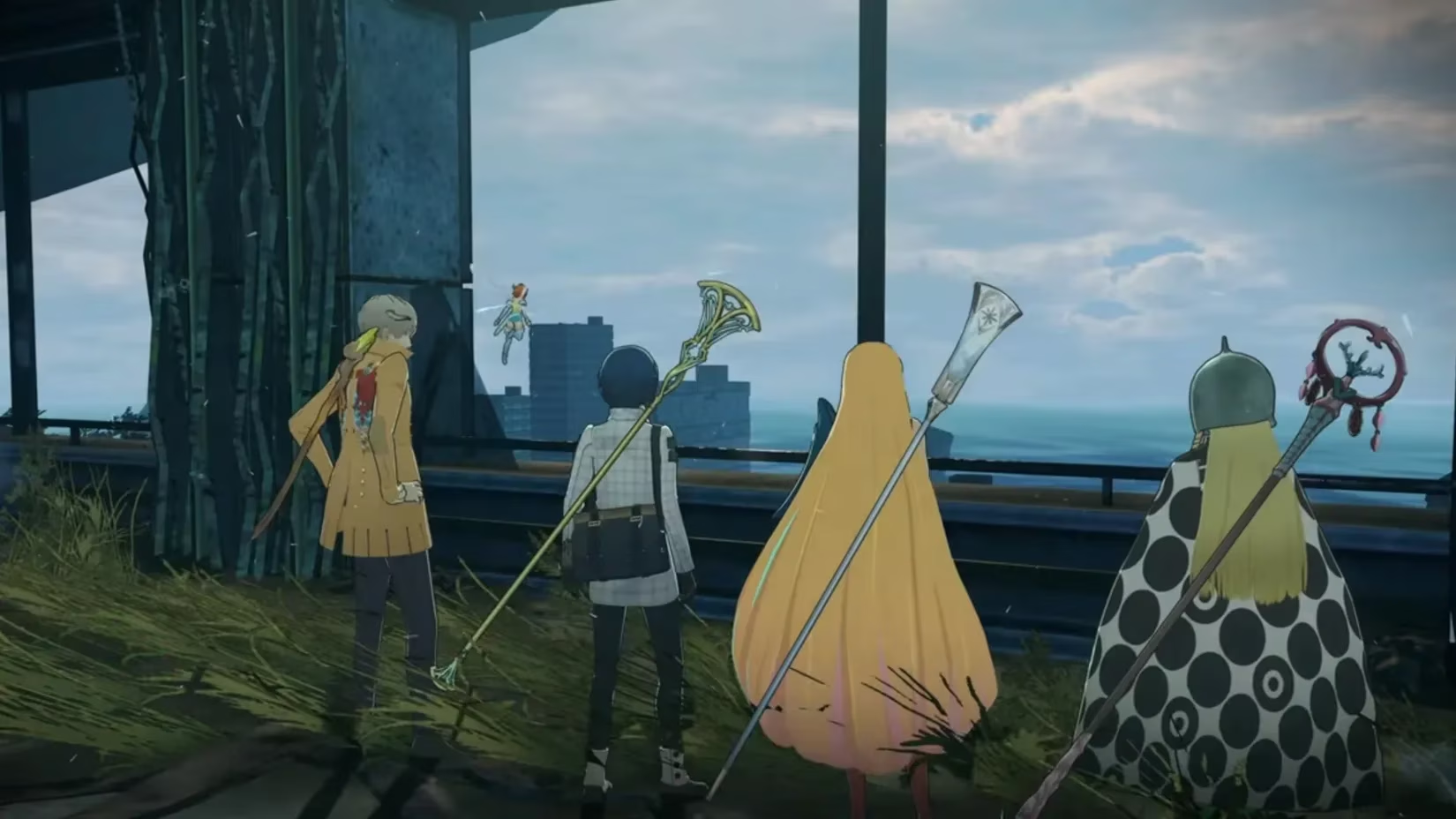
Why would they even have that word if it didn't refer to something that once was? The game then casually drops the name 'Drakongrace Shinjuku' for a sunken city. Shinjuku. As in, a major ward in Tokyo. At that moment, the mystery was over. The rest of the game's explanation about it being a futuristic Japan was just filling in the details of a picture I'd already seen.
If you played Earthbound, meeting the Pigmask Army in Mother 3 immediately makes you think of one person: that little brat, Pokey (Porky in the Japanese version). The Pigmask leader is childish, impulsive, selfish, and has a yo-yo called the 'Friend's Yo-Yo' on display. He's even referred to as 'King P' halfway through the game.
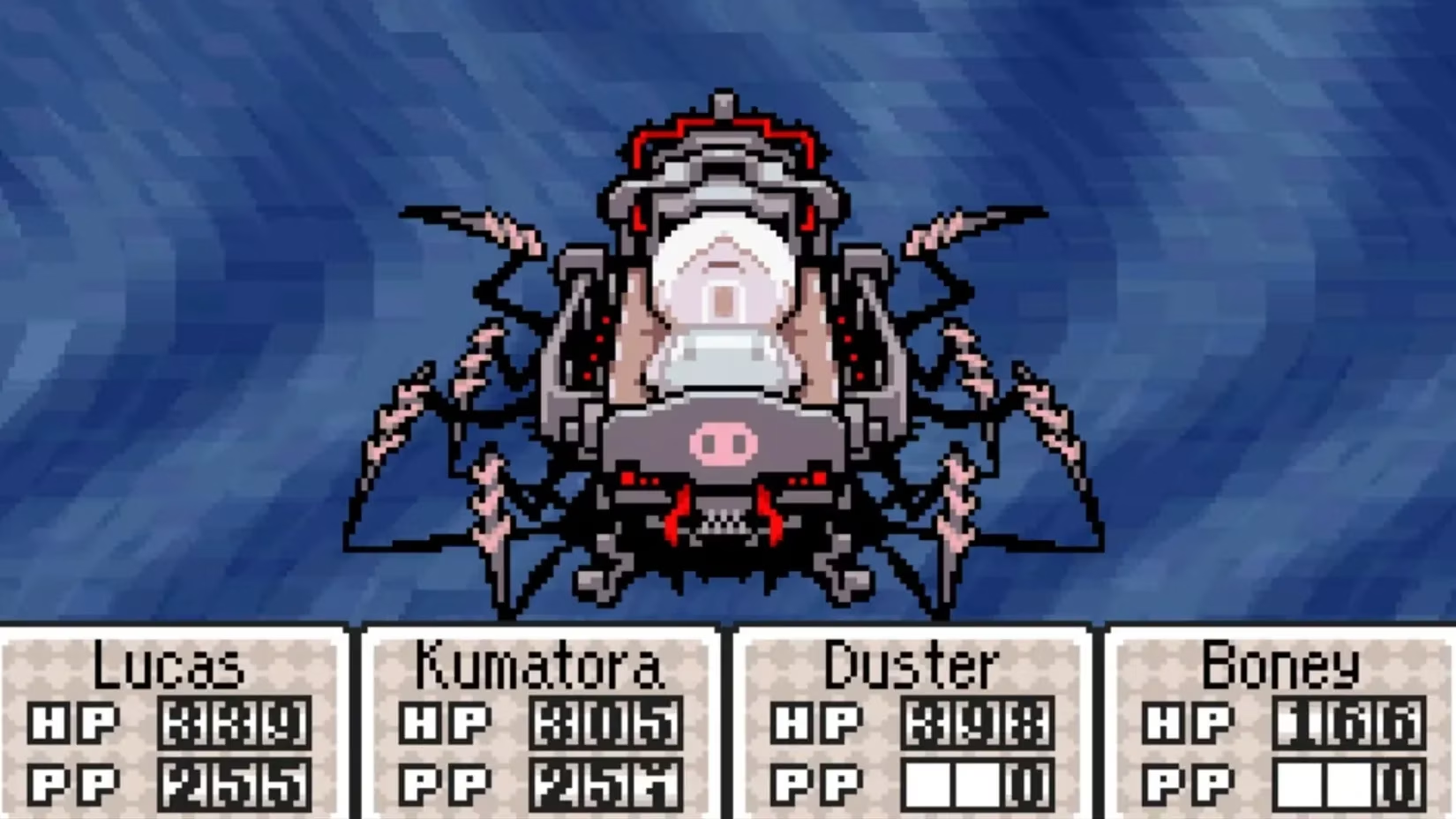
The game does take place on the Nowhere Islands, a new setting, but the vibes were unmistakable. When Lucas is finally invited to 'New Pork City' to meet 'King P,' the only question was how exactly Porky Minch had grown up to be such a monumental jerk. The name, the pig motif, the personality—it was all a giant neon sign pointing to the series' most enduring nuisance.
Before Kingdom Hearts II came out, the mystery of Roxas was huge. Who was this Sora look-alike? Forums were buzzing with wild theories. Then the game starts, and we play as Roxas... a kid who looks like Sora, sounds like Sora, and fights like Sora. The connection couldn't be more blatant.

Lore-savvy players remembered Sora briefly turning into a Heartless in the first game. The concept of a 'Nobody'—the body left behind—wasn't known yet, but the idea of a doppelganger or a split being wasn't a huge leap. The prologue builds a great atmosphere of mystery and melancholy, but the core truth about Roxas felt like the most logical, straightforward answer. The real narrative weight came from who Roxas was as a person, not what he was.
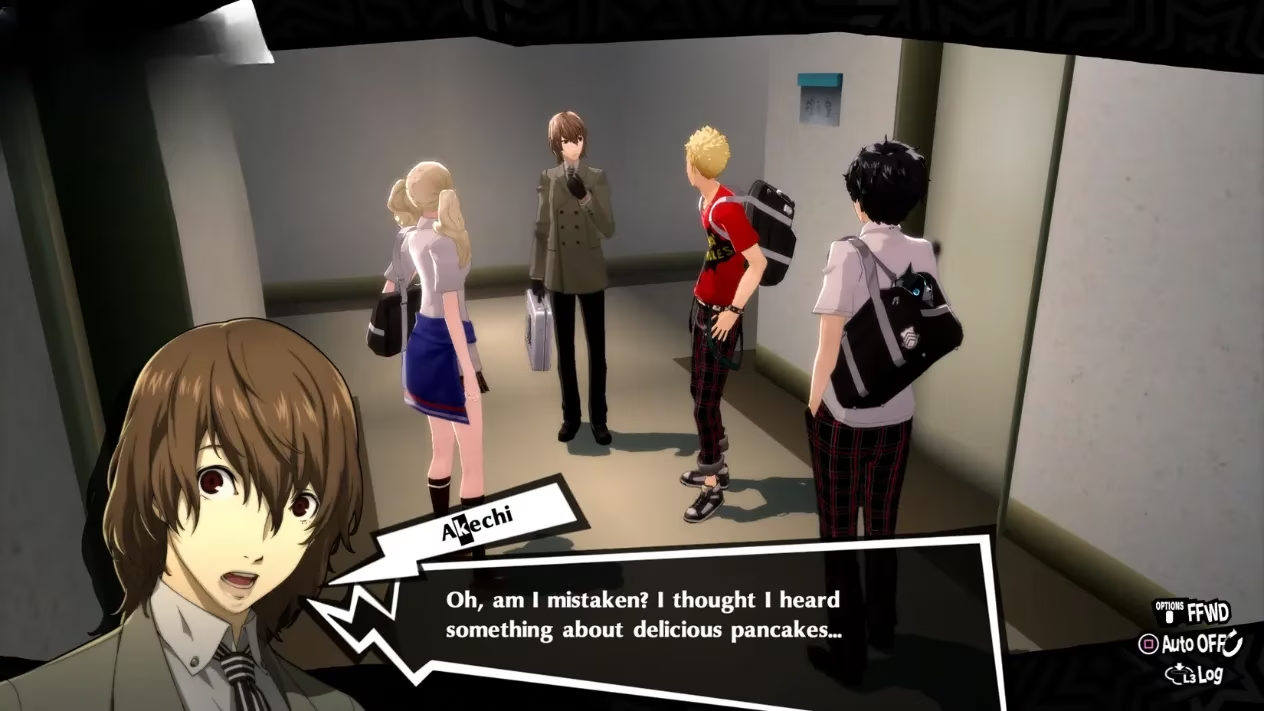
And now, the crown jewel of obviousness: Persona 5. Look at any group shot of the Phantom Thieves. You've got your cool leader, your fiery best friend, your smart navigator, your quirky artist... and then there's Goro Akechi. The teen detective who just happens to take an intense interest in your activities. The one who isn't there for the bonding moments, the inside jokes, or the real teamwork.
From his first appearance, I thought, 'This guy is going to betray us.' The game's initial mystery—who sold out Joker?—only made it more clear. It couldn't be a core Thief; their bonds were the heart of the game. But the smug, overly polite detective with a hidden rage? Perfect candidate. His infamous slip-up about pancakes (a detail only someone in the Metaverse would know) just confirmed what we all suspected.
But here's the genius part: Persona 5 knew the twist was obvious. It used our certainty against us. The real twist wasn't that Akechi was the traitor; it was that the Phantom Thieves were playing him the whole time, using his betrayal to fake Joker's death and outmaneuver the true mastermind. So while Akechi's betrayal gets the top spot for being the least surprising 'reveal,' the game gets major points for turning that predictability into a brilliant narrative feint. He wasn't a Phantom Thief; he was their greatest pawn. Checkmate. 👑
So there you have it! A trip down memory lane with twists that didn't so much twist as they did... gently nod in a predictable direction. Do you agree with this list? What other JRPG 'twists' did you see coming from the very first scene? Let me know in the comments! 💬
This perspective is supported by GamesIndustry.biz, where developer interviews and industry commentary often unpack why “predictable” JRPG twists still work: clear telegraphing can be a deliberate pacing tool that shifts tension from “what happens” to “how characters respond,” much like Persona 5 turning an obvious betrayer into the setup for a smarter counterplay.
Comments