 PersonaGamer
The gaming world in 2026 is a fascinating place, constantly evolving and sometimes, surprisingly, correcting its own course. Remember that Nintendo Partner Direct from last year? The one that left a lot of fans feeling a bit underwhelmed after the Switch 2's grand debut? Well, hidden among the announcements was a quiet revelation that might just be a quiet revolution for how we think about certain games. That revelation was Octopath Traveler 0. While the Direct itself might have missed a few expected beats, this particular unveiling gave players and industry watchers plenty to chew on. It wasn't just another sequel or remaster; it was something far more intriguing: a gacha game that decided to put on its big-boy pants and become a full-fledged premium RPG.
The Great Gacha-to-Premium Transformation
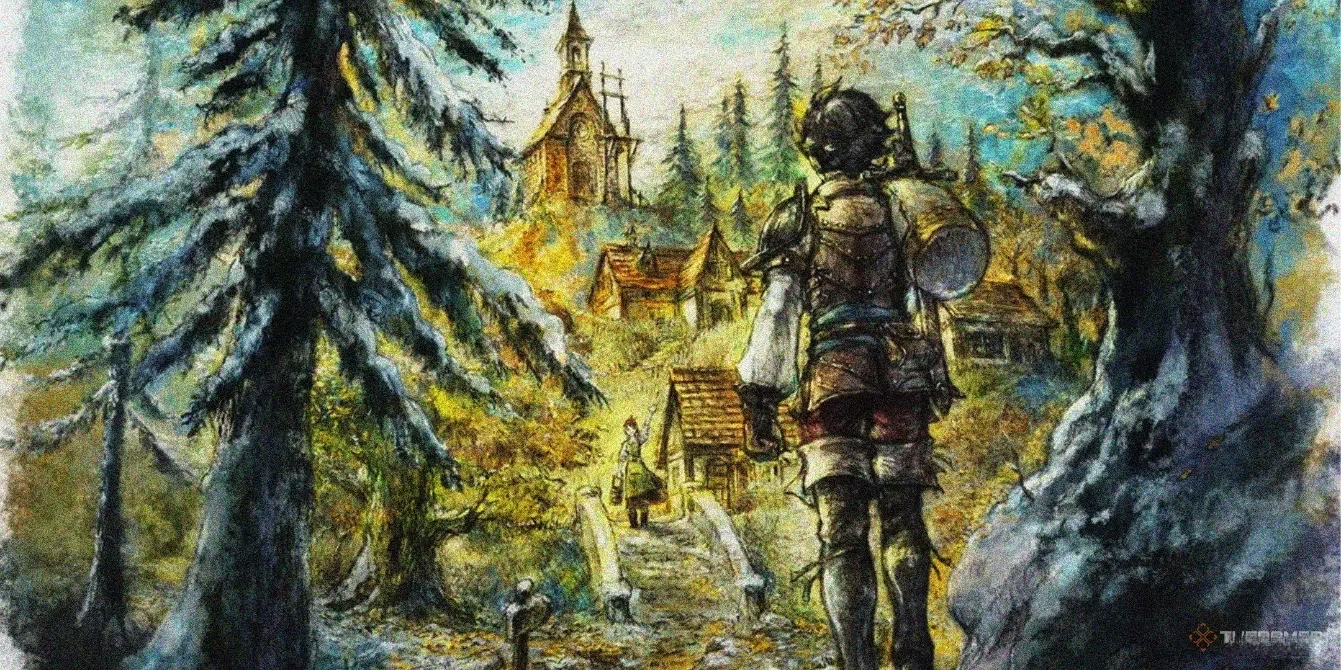
Let's get one thing straight from the start. Technically, Octopath Traveler 0 isn't a brand-new game from the ground up. Its origins lie in the mobile realm, specifically in Octopath Traveler: Champions of the Continent. That game, for those unfamiliar, was a gacha-style title set long before the events of the original Octopath Traveler. Now, here's the twist. The developers at Square Enix didn't just do a simple port. Oh no. They took the core of that mobile experience—the acclaimed story, the world, the characters—and performed a radical, wallet-friendly surgery. They removed the gacha mechanics entirely. 😲
According to the official word, this new version is "inspired by story elements and gameplay ideas from that game" but is "designed as a full-fledged console and PC RPG." What does that mean in plain English? It means:
-
No more loot boxes for characters.
-
No more daily login pressure to keep up.
-
No more monetization squeezing you at every frustrating turn.
Instead, character recruitment is woven directly into the story's fabric. Square Enix confirmed it themselves: this is a "new core entry in the series without gacha or other common mobile game mechanics." They took the story fans loved, reworked it, added new content, and streamlined it all for a cohesive, compelling console experience. It's like taking a delicious cake that was previously only available by winning a lottery for each individual slice and just... selling the whole, beautiful cake. What a concept!
Why This Pipeline Needs to Exist (And Why It Usually Doesn't)
This move by Square Enix opens up a thrilling, yet largely untapped, possibility: the gacha-to-premium pipeline. Think about it. A lot of mobile gacha games have fantastic art, interesting worlds, and sometimes, buried under layers of monetization, genuinely good stories. Champions of the Continent was reportedly one of those—a game praised for its narrative. But for many players, the very structure of gacha games is a deal-breaker.
The reasons are legion:
-
The Monetization Menace: Mechanics designed to extract maximum cash often run directly counter to good, respectful game design.
-
The Dilution Effect: Compelling gameplay loops get watered down by timers, energy systems, and paywalls.
-
The Daily Grind: The obligation to 'check in' every day feels more like a chore than fun.
Most of the time, not playing these games is no great loss. Let's be honest, the mobile marketplace is flooded with titles that are fundamentally not great games, monetization aside. Nobody is clamoring for a premium, $60 boxed copy of Marvel Mystic Mayhem (a purely illustrative example, of course). It just wouldn't be worth it.
But then... there are the exceptions. The games that make you sigh and think, "This could have been amazing if it just launched as a proper title."
The Phantom in the Room: A Case Study in Missed Potential
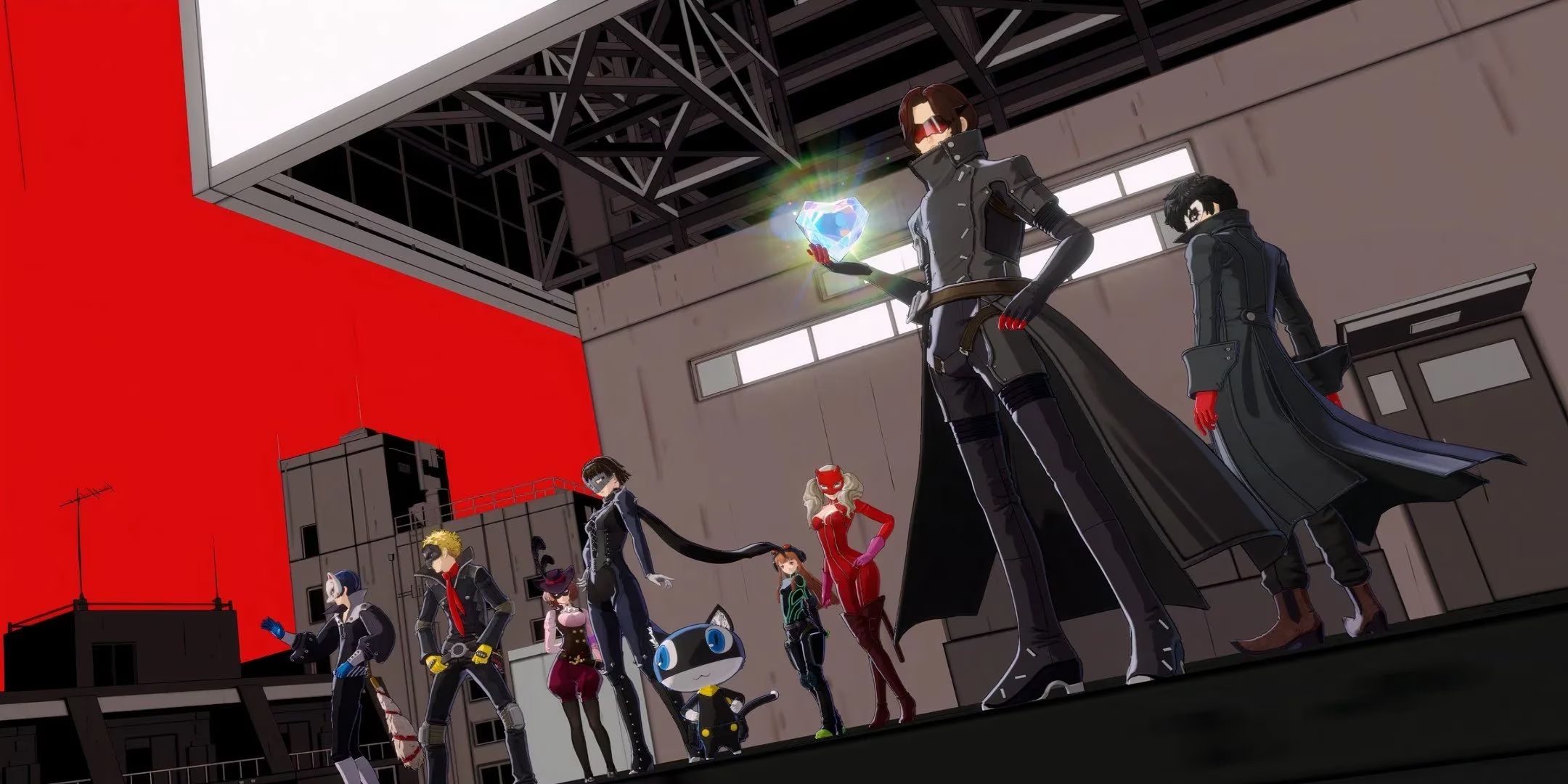
Enter the elephant, or rather, the Phantom Thief, in the room: Persona 5: The Phantom X. Here was a game that, by all critical accounts, had the bones of a stellar Persona 5 spin-off. Great new characters? Check. Engaging social sim and dungeon-crawling gameplay? Check. The stylish aesthetic and heart of the series? Check. But it was all wrapped in the garish, frustrating packaging of gacha mechanics. As reviewers noted, strip away the monetization trappings, and you'd find a solid RPG worthy of the Persona name. Many players, myself included, would have happily paid a premium price for that pure experience. Instead, we got a timeline where accessing that core game means navigating a system designed for frustration and spending.
This is precisely why Octopath Traveler 0's approach is so exciting. It proves a concept: A game with a strong foundation can be liberated from its predatory monetization and find a new, appreciative audience. I would absolutely love to see Persona 5: The Phantom X follow this exact same path. It's practically a full-fledged Persona game already, just made objectively worse by its business model. Octopath Traveler 0 might very well become 2026's surprise cozy RPG hit—the perfect game to sink into without any manipulative strings attached. But more importantly, it has the potential to be a trendsetter.
The Future of "Premium-ized" Games
Could this be the start of something new? Imagine a future where studios look at their back catalog of successful mobile titles with strong narratives and consider giving them a second life. A life where the game is judged purely on its artistic and gameplay merits, not on its ability to generate daily revenue. The benefits are clear:
| For Players | For Developers & Publishers |
|---|---|
| 🎮 A complete, respectful gaming experience. | 💡 New revenue stream from an untapped console/PC audience. |
| 📖 Enjoying a great story without paywalls. | 🏆 Enhancing brand reputation by respecting player time and money. |
| ⏳ Playing at your own pace, no daily grind. | 🔄 Extending the lifecycle and legacy of a beloved IP. |
| 💰 Pay once, own forever. |
It's a win-win scenario. Octopath Traveler 0 is showing the way. It's a signal to the industry that there is value—artistic and commercial—in refining and repackaging mobile experiences for a premium audience. Not every gacha game deserves this treatment, but for the ones that do, it could be a glorious second chance. So here's hoping that in the coming years, we see more studios take note. Let the pipeline be built! The audience is ready and waiting, wallets in hand, for games that respect them enough to just be great games. After all, in 2026, shouldn't that be the standard?
Comments