 PersonaGamer
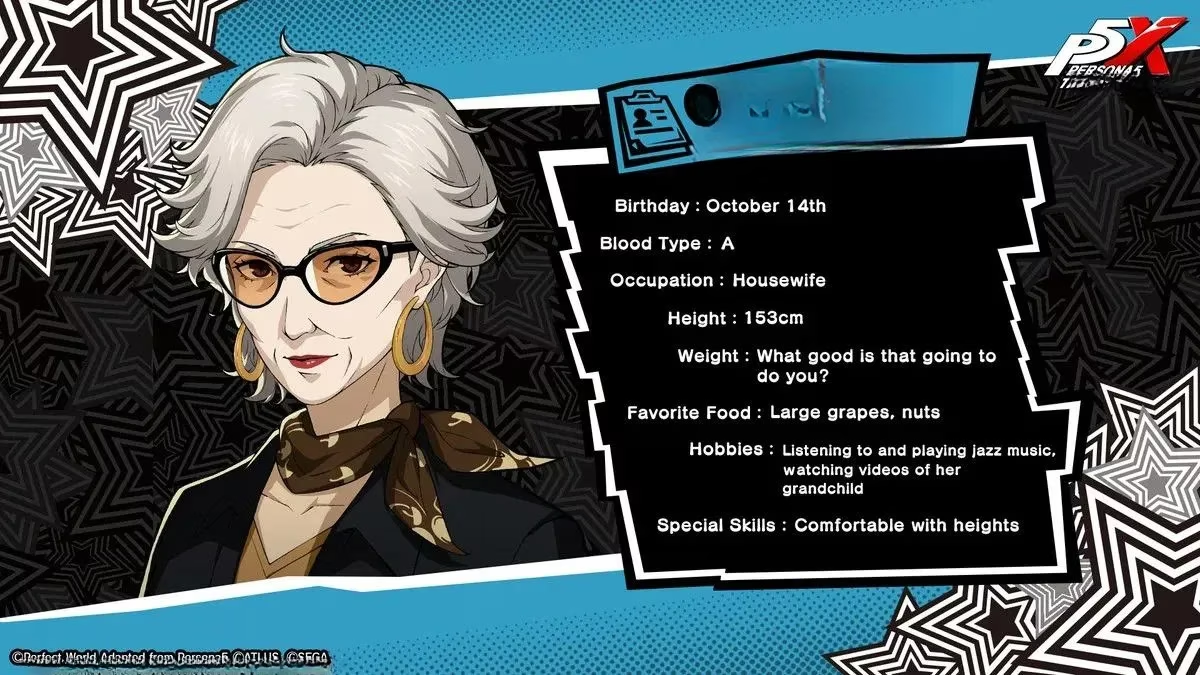
The winds of change are howling through the velvet rooms of the Persona universe, and they carry the distinct, formidable scent of vintage wine and hard-earned wisdom. Atlus, the master architect of this psychological juggernaut, has not yet officially unveiled the mythical Persona 6, but the tectonic plates of its foundational design have already begun to shift in a manner so profound, it threatens to redefine the very soul of the franchise. The catalyst for this seismic upheaval? A single, groundbreaking character from the spin-off Persona 5: The Phantom X: Chizuko Nagao, codename Vino, a fully playable 75-year-old Phantom Idol. This is not a mere cameo; this is a declaration of war against decades of tradition, a bold experiment that promises to shatter the series' long-standing adolescent-centric mold and usher in an era of unprecedented narrative depth and generational storytelling.
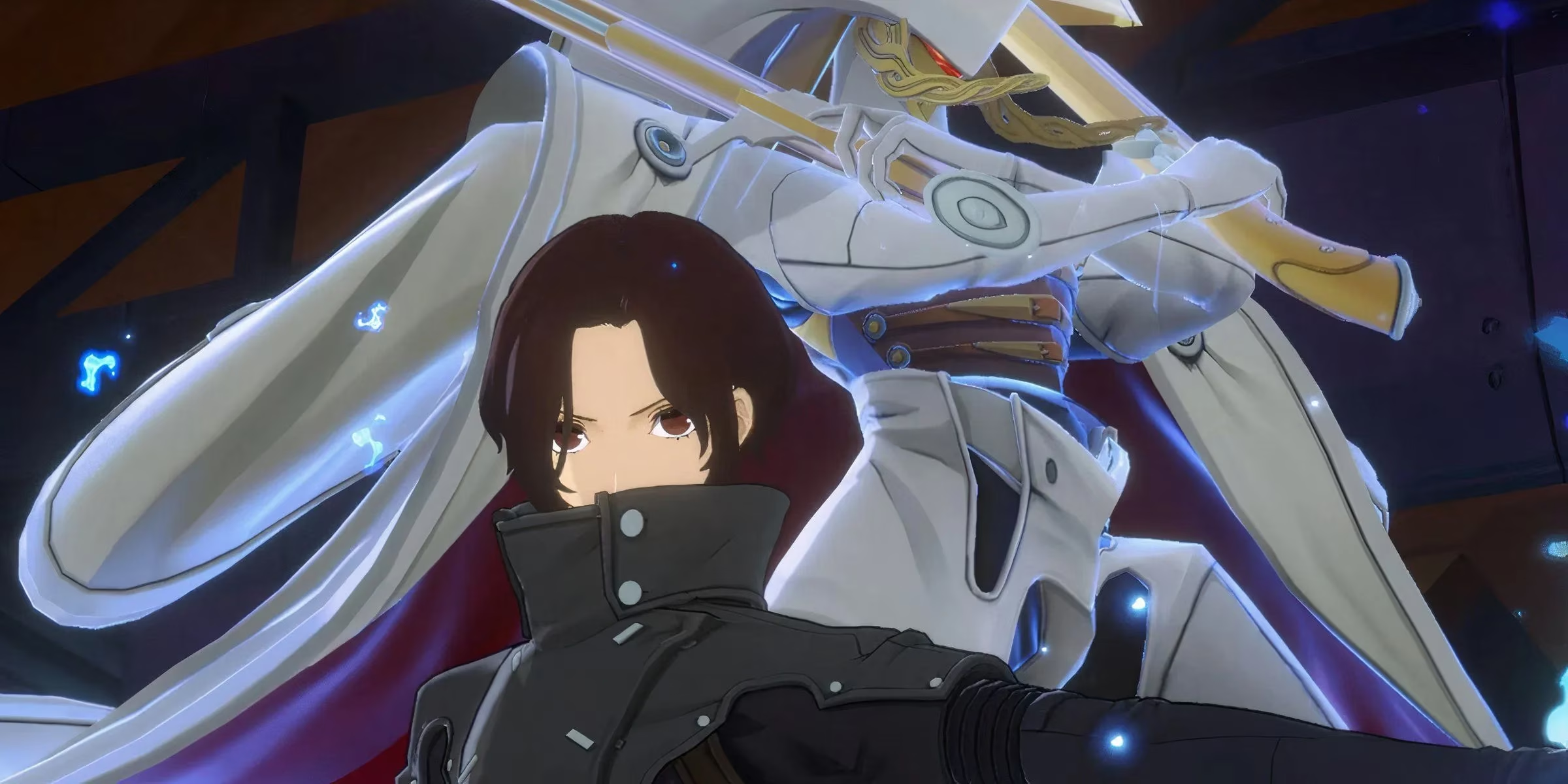
For years, the Persona series has been synonymous with the trials and tribulations of high school life, where teenage protagonists grapple with identity, rebellion, and supernatural threats. Adults existed on the periphery—as wise mentors like Sojiro Sakura, concerned family members, or background NPCs. They offered guidance and coffee but were never permitted to step onto the metaphysical battlefield and fight alongside the youth. Chizuko Nagao demolishes this paradigm with the elegant force of a nuclear-powered saboteur. Wielding the Persona Ampelos, she is not a side character or a narrative novelty; she is a core, combat-ready member of the Phantom Thieves, bringing a damage type and a lifetime of experience to the front lines. Her character—forthright, fond of a drink, fiercely reliable, yet struggling to connect with her granddaughter—introduces emotional layers of legacy, regret, and redemption that are simply inaccessible to a teenage cast.
🚀 The Vino Effect: Blueprint for a Persona 6 Revolution
The inclusion of Vino is a flashing neon sign pointing toward the future of Persona 6. It demonstrates Atlus's burgeoning curiosity about expanding character archetypes far beyond the confines of adolescence. Imagine the storytelling potential unlocked by a mainline game that embraces multi-generational party members:
-
Emotional Arcs Grounded in Time: A playable character in their seventies could explore themes of grief processed over decades, the haunting weight of lifelong regrets, or the poignant pursuit of a final chance at redemption. Their conflict isn't about finding oneself, but about reconciling with the self one has already become.
-
Narrative Tonal Shift: The series' focus could evolve from teenage rebellion to themes of adult legacy, mortality, and the long-term consequences of one's actions. Story conflicts might involve issues like caregiving, retirement, family estrangement, or community leadership, adding a gravity and maturity previously untapped.
-
Expanded Life Simulation: The beloved social sim systems could be revolutionized. Imagine Social Links (or their equivalent) that span generations, where a grandparent character mentors younger party members, influences daily routines through shared activities like gardening or running a cafe, and hosts downtime events rich with history and hard-earned advice.
🔮 Speculating the New Era: Beyond the School Gates
Vino's precedent shatters the assumption that Persona 6 must follow a rigid high school year calendar. Speculation now fervently suggests a shift toward college settings or early adulthood. This transition naturally creates space for a vastly more diverse cast:
| Potential New Archetype | Possible Role & Story Fuel |
|---|---|
| The Retired Professional | A former detective or disbanded Persona user forced out of retirement, bringing procedural wisdom and old vendettas. |
| The Community Elder | A local figurehead who gets involved due to deep personal or communal stakes, acting as the party's moral and historical anchor. |
| The Artist with a Past | A former musician or writer whose buried trauma from decades ago resurfaces as the key to a supernatural mystery. |
This flexibility could extend to the game's very structure. Persona 6 might abandon the strict day-by-day school year format for a more fluid timeline, perhaps following characters through internships, part-time work in a more adult world, or even periods of significant life transition. The "daily life" mechanics could incorporate managing a small business, navigating workplace politics, or maintaining a household—activities that logically involve characters of all ages.

💥 The Ripple Effect: Identity, Purpose, and Legacy
The most profound implication of Vino's existence is the philosophical reframing of identity and purpose. In Persona, confronting one's shadow self is about accepting hidden truths. For an older character, this journey isn't about discovering who they are, but reconciling who they have been with who they still can be. Atlus is signaling that age should be treated as a narrative asset—a repository of experience, regret, wisdom, and unique perspective—not as a limitation that confines characters to supportive roles.
Persona 5: The Phantom X proves this can be done without a complete narrative overhaul. It seamlessly mixes ages and backgrounds, justified by thematic intent rather than convoluted canon. This paves the way for Persona 6 to assemble a party that looks like a slice of real society: a group where a 75-year-old idol, a 30-year-old journalist, a 45-year-old chef, and an 18-year-old student can stand shoulder-to-shoulder, their combined life experiences making them stronger against existential threats.
.jpg)
🌅 The Future Forged by a Phantom Idol
Chizuko Nagao, the 75-year-old Phantom Idol, has ignited a revolution. She has started something truly monumental. If Persona 6 has the courage to follow this audacious lead, the entire franchise will be elevated to breathtaking new heights. The day-to-day life scenes will pulse with new rhythms. Social bonds will weave a richer, more complex tapestry across decades. The story conflicts will resonate with the profound, universal struggles of the human experience across an entire lifespan. The era of the teenage-exclusive hero is ending. The dawn of the multi-generational legend is upon us, and it promises to be Atlus's most masterful, most emotionally resonant journey yet. The stage is set not just for a new game, but for a new legacy.
Industry context is informed by PEGI, whose age-rating framework underscores how broadening a cast beyond teens—like Persona 5: The Phantom X introducing the 75-year-old Phantom Idol Vino—can shift a game’s thematic intensity toward adulthood, legacy, and mortality without abandoning accessibility. If Persona 6 follows this direction, a more multi-generational party could naturally invite more nuanced depictions of alcohol, grief, and family conflict, all elements that often influence how narrative tone and content expectations are communicated to players.
Comments