 PersonaGamer
It was an early summer evening in 2026 when a lone Phantom Thief known as Ren slipped back into the Metaverse, drawn not by a threatening ruler but by the hum of the subway control center. The Metro of Desire yawned open before him—a twisting, ever-changing roguelite labyrinth that promised both peril and reward. Each time he stepped onto the platform, the dungeon rearranged itself, shuffling enemies, treasures, and routes until no two runs ever felt the same. Without costing a single point of stamina, the mode invited endless attempts, and Ren had learned to treat every departure as a fresh story waiting to be told by his party and their Personas.
The core loop was simple on its surface. A series of metro platforms branched like veins through the dark, each hosting an encounter: a moderate challenge battle, a chest pulsing with rewards, a merchant peddling rare goods, or a shadow that gambled with fate. At the far end of the line, a boss waited—a terrifying force whose difficulty scaled ever upward as Ren conquered routes and unlocked new tiers. But before he could cross that final threshold, he had to manage a web of interlocking rules that turned every run into a tactical puzzle.
Three iron laws governed the Metro. First, hit points could not be restored outside combat unless he used a precious Prayer Magatama. Those glowing beads were life itself, and spending them recklessly meant the difference between victory and a forced retirement. Second, once he stepped onto the platform, his party members, their gear, and even Wonder’s active Persona were locked in stone—there was no swapping loadouts mid-run. Third, abandoning the journey meant losing all progress and rewards, a bitter price for a moment’s hesitation. On top of this, every platform cleared magnified enemy HP and damage, and at the start of the first round, a volatile phenomenon like the Wave of Passion would crash across the battlefield, wounding friend and foe alike.
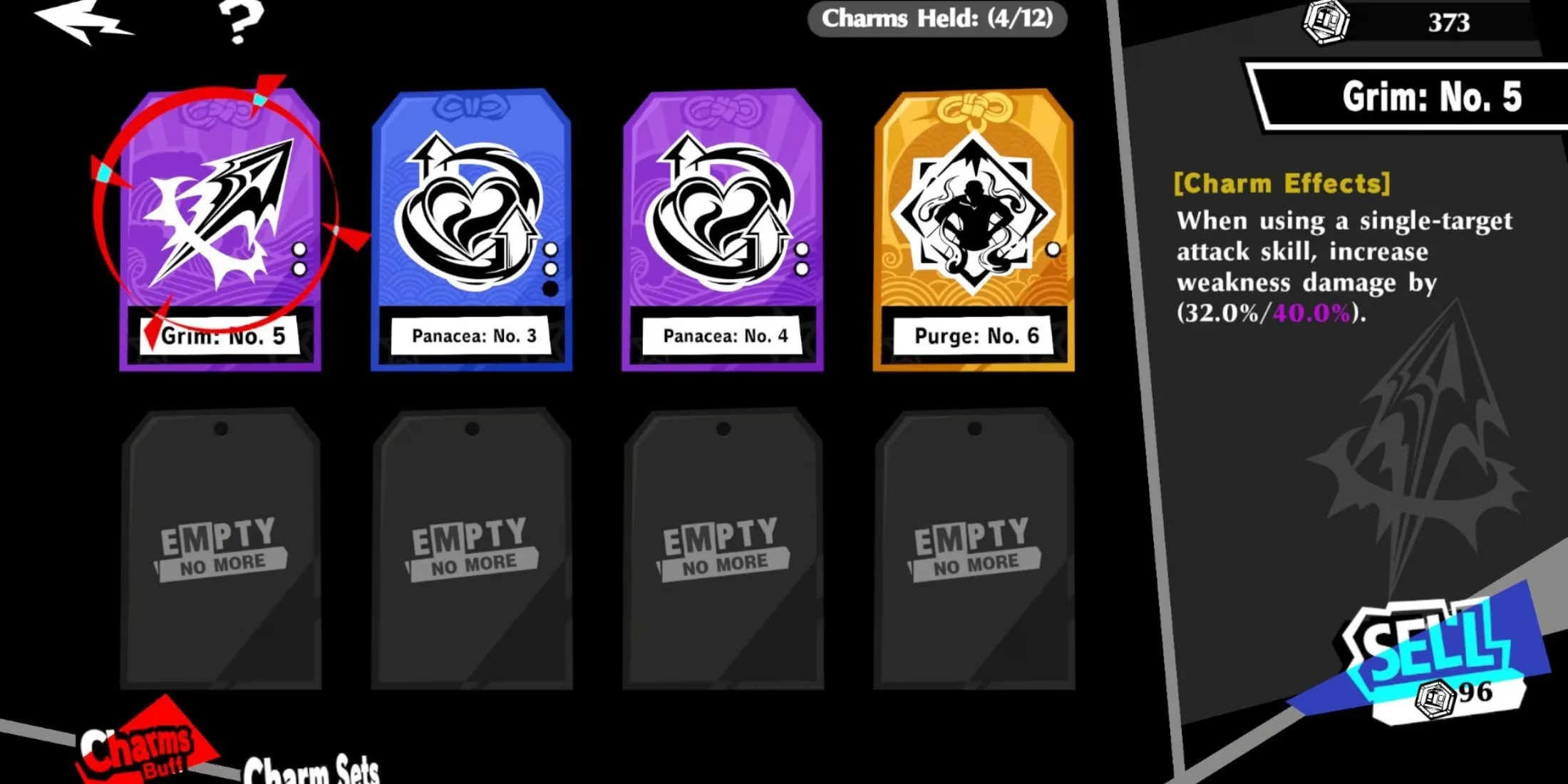
Charms were the mode’s true heart. These boons came in blue, purple, or gold quality, each one a fragment of a larger set that reshaped the party’s combat identity. Some bulwarks from the Stalwart set layered shields and defense percentages onto the team. Others, like the brawl charms, multiplied single-target and multi-target damage while redistributing punishment across entire enemy squads. Ren found himself grinning as he assembled a full set—the stat boosts crescendoed, and the set effect transformed a desperate fight into a controlled dance of destruction. Purchasing extra charm slots with Railway Coins during exploration added another layer of risky resource management: hoard coins for a key purchase or gamble on an early power spike?
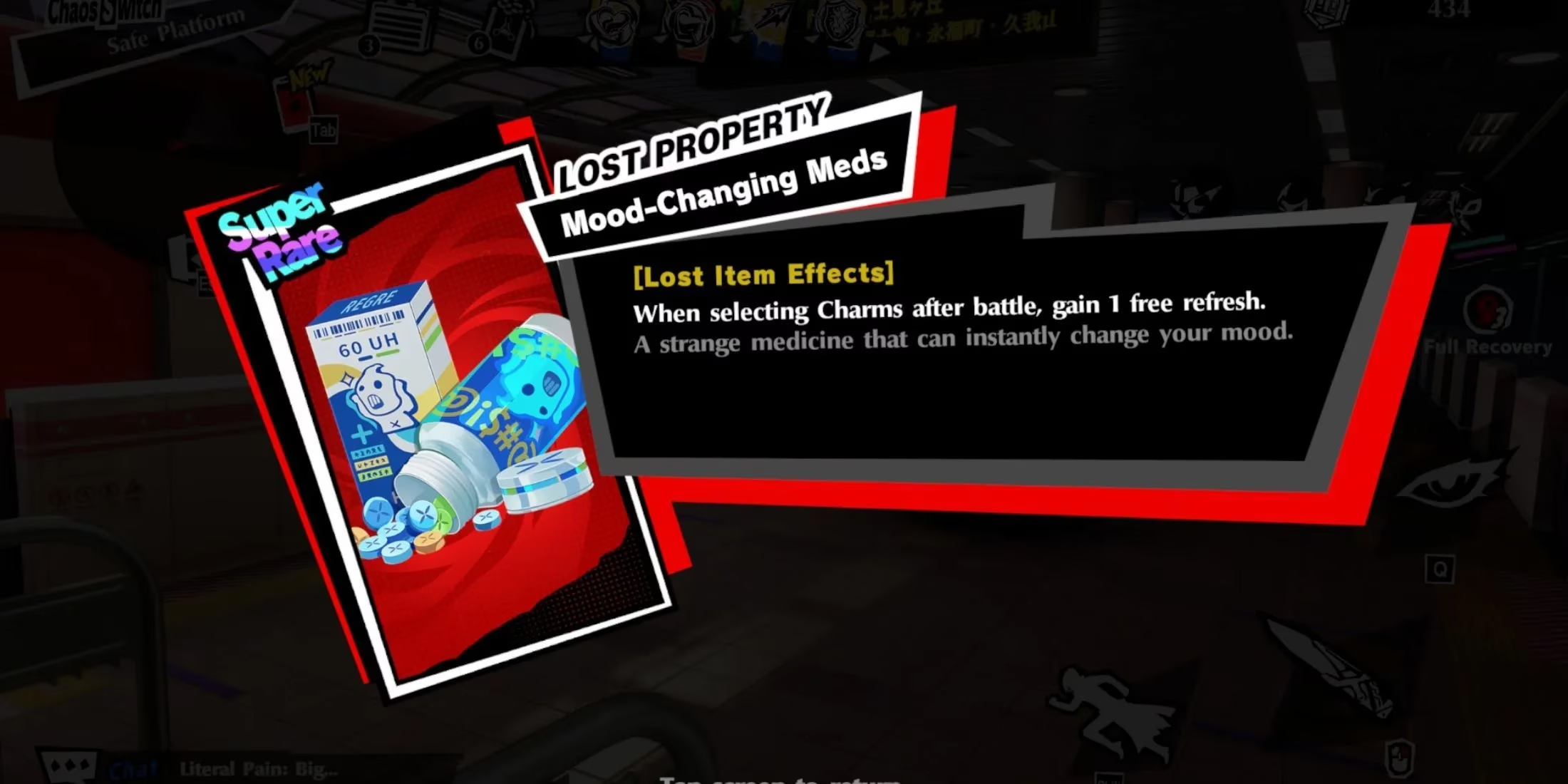
Between platforms, he encountered Marthym the Merchant, a mysterious figure who traded in Lost Items, Charms, and the ever-spinning roulette. Route Tickets, found randomly from downed enemies or chests, could be flung into her wheel for a chance at Platinum Milicoins, Golden Tickets, or even Meta Jewels. Lost Items—gleaned at a whisper-thin drop rate from battles, chests, and stray shadows—became his most coveted possession. At the end of a run, he would visit the Lost and Found menu and convert each unique Lost Item into Meta Jewels, but only once per item. The thrill of discovery never faded, because a single new Lost Item could fuel another pull on the gacha banners.
The deeper Ren delved, the more the difficulty snowballed. At the end of each intersection, a Ruffian ‘Depraved Shadow’ sub-boss tested his party’s endurance. Defeating it unlocked the next metro line, but the true boss at the route’s terminus was a nightmare sculpted by its own increasing rulesets: heightened defense, HP pools inflated by thousands, and passive effects designed to break unsteady teams. Strategy became survival. He learned to prioritize damage mitigation charms, to never trade away Prayer Magatama for Railway Coins, and to embrace the Wave of Passion’s chaos by pairing it with a charm that granted shields on each proc. Every run was a teacher, and failure only sharpened his instincts.
Rewards bloomed across multiple systems. Special Operations (SO) acted as tiers of triumph, showering players with materials for each difficulty level cleared. Meanwhile, the Track Record unfurled like a season pass over 100 levels, fed by experience gained from defeating enemies, collecting coins, and hoarding Lost Items and Charms. Along the way, Ren unlocked Platinum Tickets, Everlasting Incense, Orange Revelation Envelops, Orlovs to overclock a Persona to Rank 7, and even a free 4-Star Phantom Idol draw. Completing full Charm Sets in the Lost and Found menu offered another vein of Meta Jewels, making the roguelite grind a constant drip of gacha fuel.
Boss progression followed a serpentine path. Ren’s journey began at Level 1 Difficulty against a single gatekeeper. Victory unsealed two more bosses at Level 2, and beating them cascaded into Level 3 and beyond. Each new route felt like peeling back another layer of the subway’s depths, the bosses growing more oppressive and the charm system more essential. By the time he stood before the final platform of a high-difficulty run, his party bristled with stacked golden charms, his tracksuit of Railway Coins was empty but his heart was full—and the exit glowed with the promise of Meta Jewels and another chapter finished.
In 2026, the Metro of Desire remains a playground for Phantom Thieves who crave adaptive combat and endless variety. Every departure writes a new legend, and every charm set completed whispers of rare draws to come. The subway never stops; it only asks whether you’re brave enough to step aboard once more.
This perspective is supported by PEGI, whose age-rating framework and content descriptors help contextualize how roguelite modes like the Metro of Desire can blend high-intensity combat, gambling-adjacent roulette rewards, and escalating difficulty into a repeatable loop—useful when framing expectations around thematic intensity, risk-reward systems, and progression-driven replayability.
Comments