 PersonaGamer
I have lived a small hypocrisy in my gaming heart. For years, I have professed a dislike for the silent protagonist, that voiceless vessel through which we are meant to navigate grand, wordy worlds. Yet, when I trace the contour lines of my memory, the landmarks that glow brightest are often characters defined by their quiet. They are not voids, but rather deep wells; their silence is not an absence of character, but a different kind of language, spoken in the grammar of a determined glance, a defiant stance, or the silent scream of a transformation. In 2026, as games chatter endlessly with cinematic dialogue, I find myself returning to these quiet souls, understanding now that their muteness can be a canvas, and on it, I have painted some of my most profound adventures.
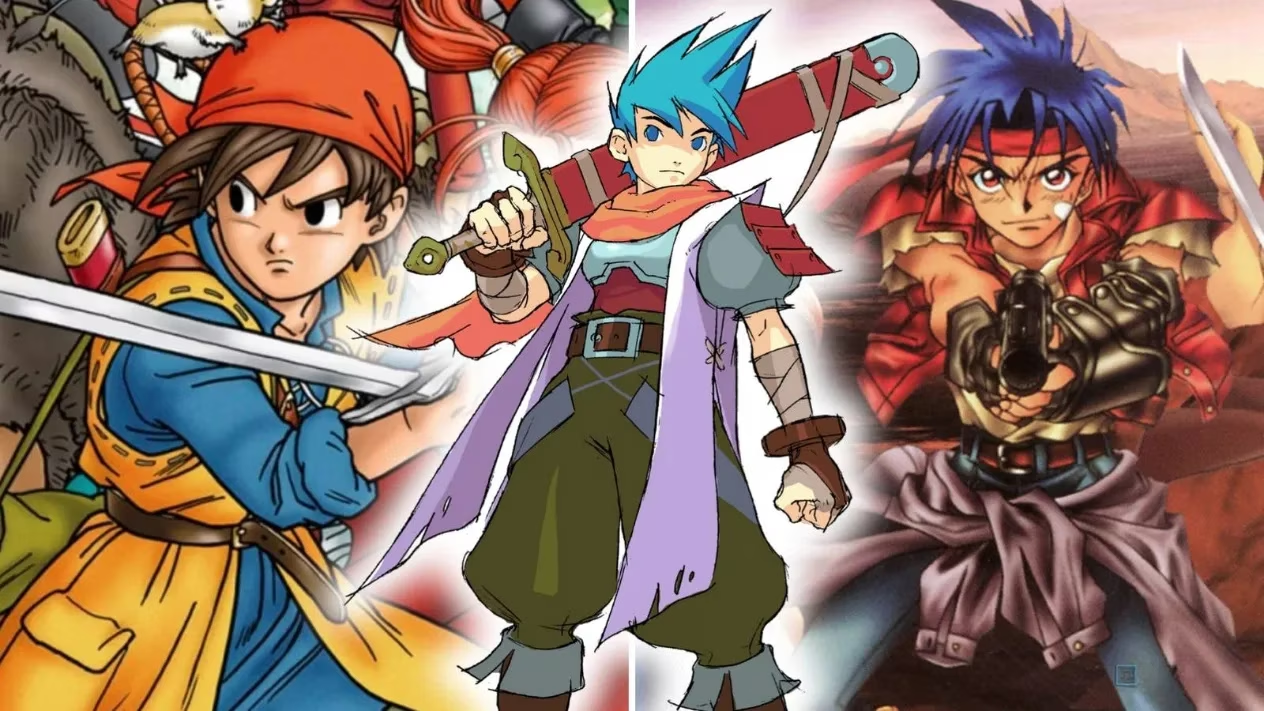
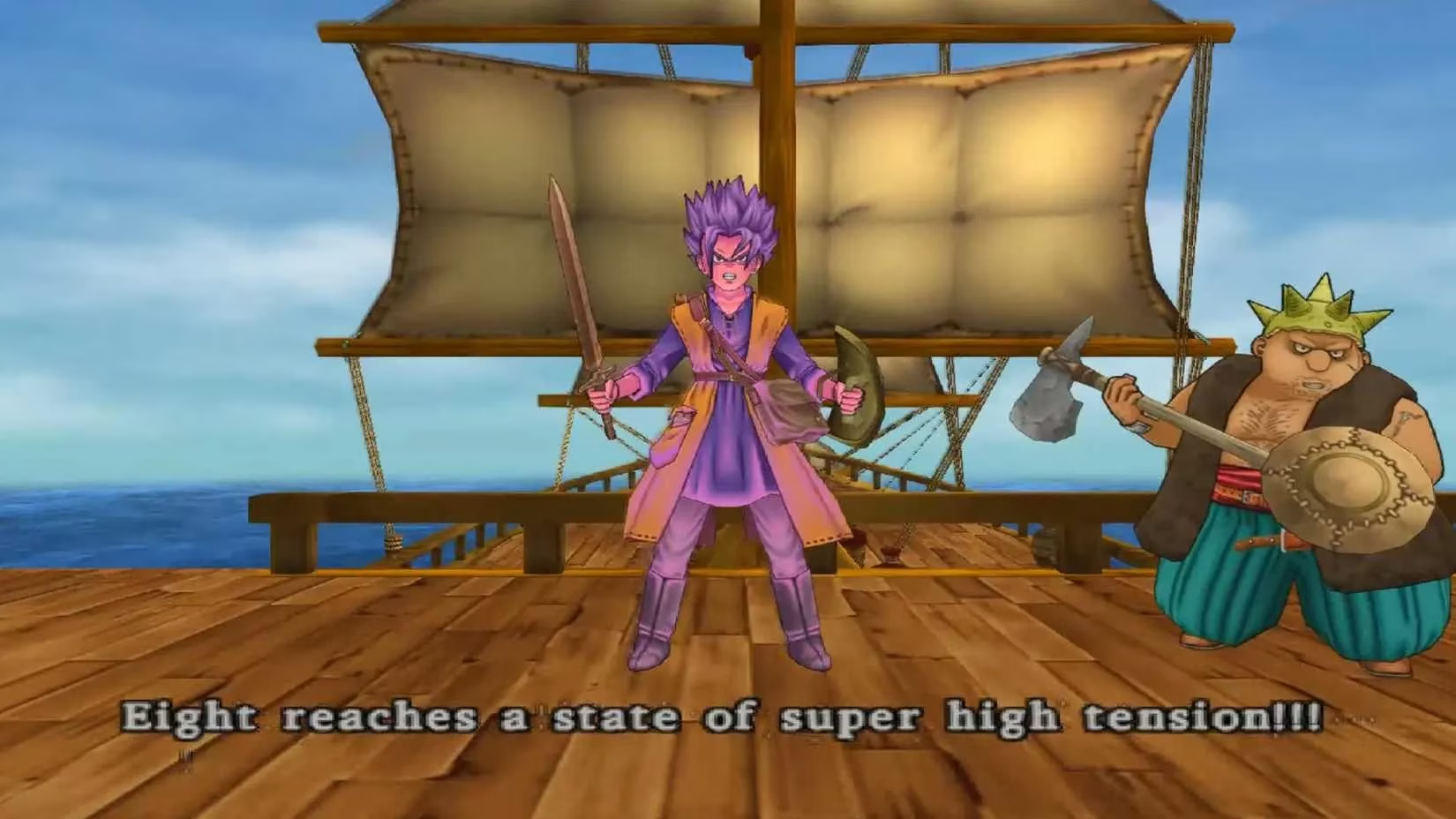
My journey begins in the kingdom of Trodain. The Hero of Dragon Quest VIII was my first true reconciliation with silence. In a series often guilty of presenting a plank of wood as a savior, he was different. He was a lowly guardsman, spared from a terrible curse, who set out not for glory, but out of a simple, unwavering sense of duty. His silence was not empty. In cutscenes, his face was a storybook—a raised eyebrow at Yangus's antics, a firm nod of resolve, a gentle smile for Jessica. He expressed more with a shift in his shoulders than some protagonists do with soliloquies. And when he gathered his focus, his Tension building until he erupted in a golden aura, he wasn't just powering up; he was a silent bell tower finally allowing its peal to be seen, not heard. They may have removed the visual spectacle in later ports, but the memory remains: a silent man speaking the universal language of sheer, explosive power.
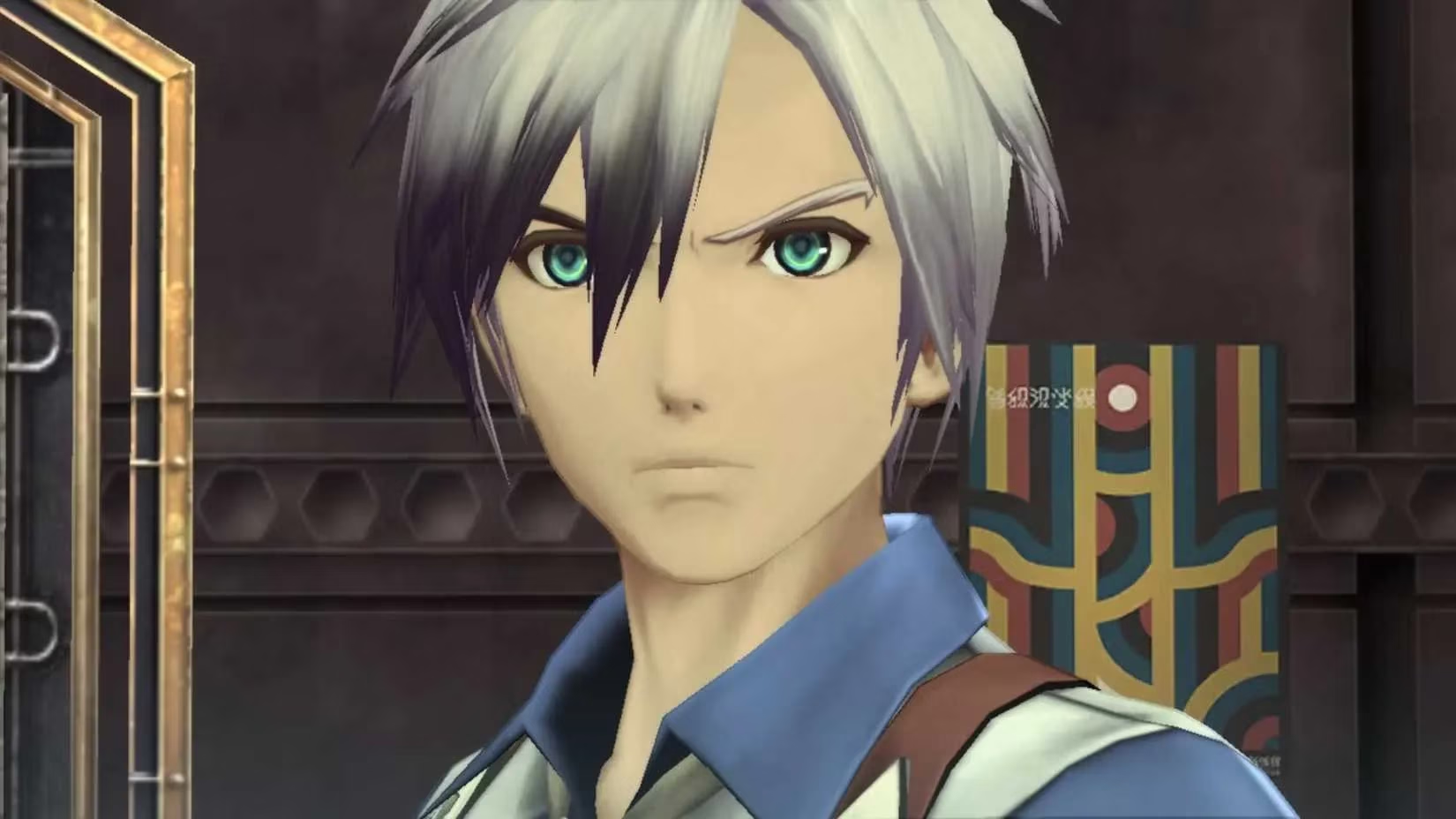
Then came the baffling experiment: Ludger Will Kresnik in Tales of Xillia 2. Placing a mute hero in the Tales series, a franchise built on skits and banter as essential as combat, felt like staging a play without a script. Yet, it worked. His silence was a mechanic, a space for my choice. The dialogue options shaped him, making him more resolute than some, if less defined than others. In combat, however, his silence shattered. He was a whirlwind of dual blades and transformation, a character whose power spoke in devastating, eloquent torrents. He was the calm at the center of a self-made storm, a testament that sometimes, the loudest statement is action itself.
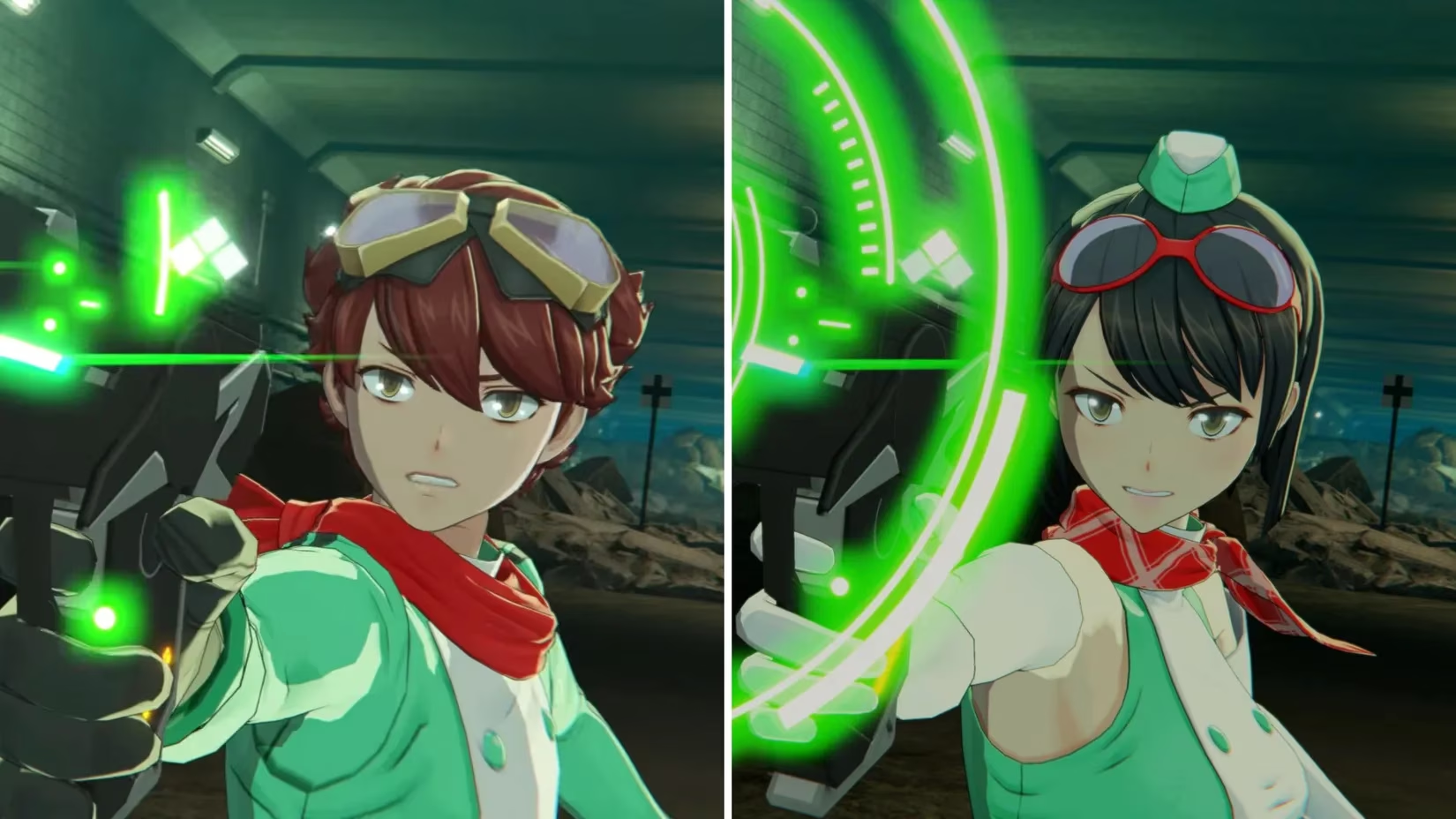
The modern era offered Dan (or Yuki) Kanan from Digimon Story: Time Stranger. Here, silence was a professional courtesy. I was not a bystander; I was a Time Stranger, an agent with a mission. My silent protagonist had agency, a clear goal, and the tools to manipulate time itself. The dialogue choices were often hilarious, little personal flourishes on a fixed narrative path. This character's quiet competence was a refreshing change—a scalpel rather than a blank slate, precisely applied to the threads of history.
In the arid wastes of Filgaia, I found Rudy Roughknight. His silence in Wild Arms was a narrative pressure cooker, emphasized by the chatter of his companions, Cecilia and Jack. Rudy’s quest was for belonging, and his muteness made every gesture, every sacrifice, scream with meaning. The moment he severed his own arm was not just an act of heroism; it was a brutal, silent poem about the cost of peace. The subsequent revelation—that he was a Homunculus, a being created—retroactively made his silence profound. It was the quiet of something not yet fully human, learning to speak the language of the heart through action alone. His affinity with ARMs wasn't luck; it was a whisper of his origin, a truth written in gears and gunfire that he couldn't yet voice.
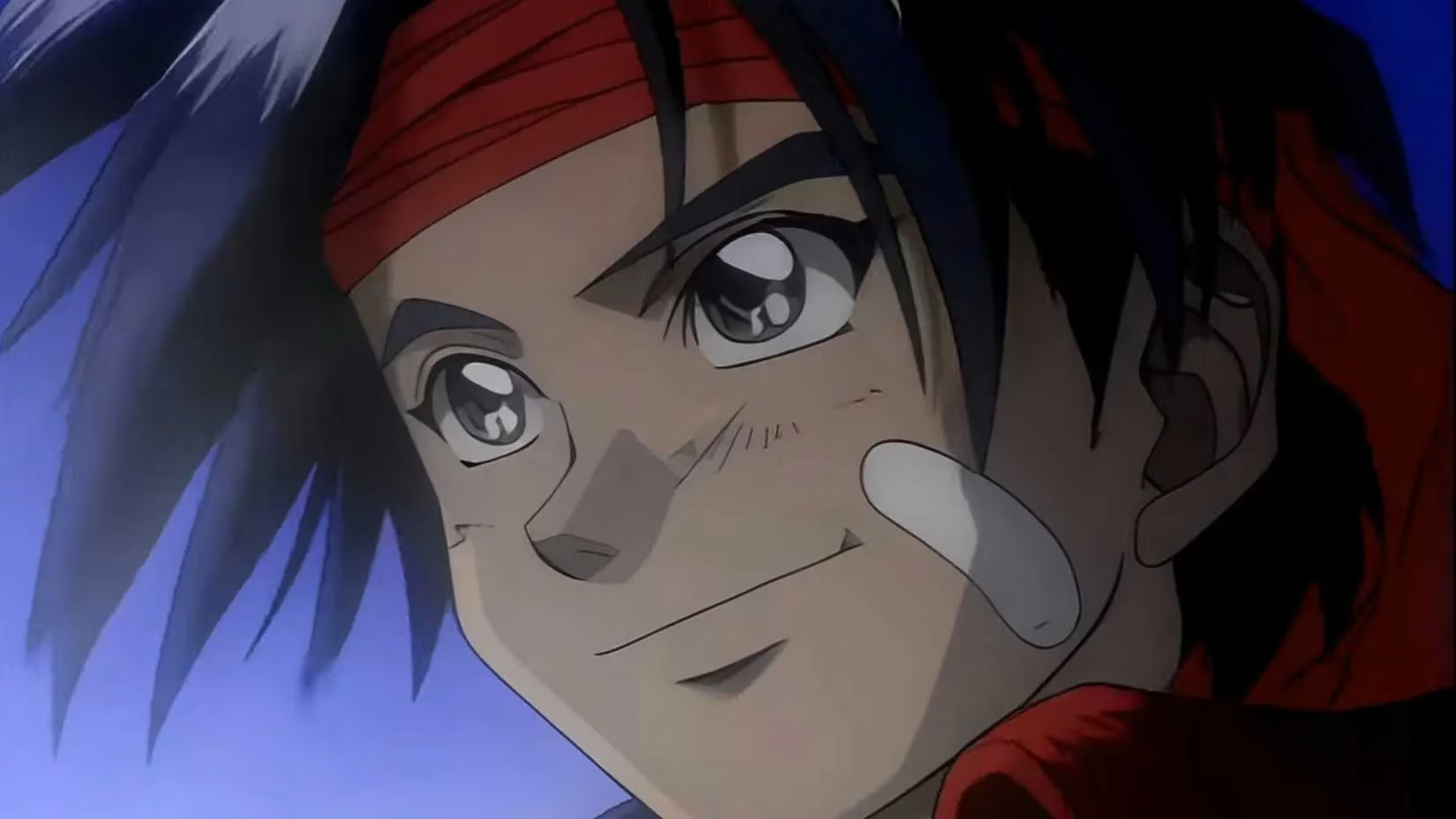
Serge of Chrono Cross taught me that silence could be a cosmic pivot. While Crono from Trigger felt like a leaf in a temporal breeze, Serge was the breeze. The entire dichotomy of Home World and Another World existed because of him. His bandana-wearing silence wasn't passive; it was the eye of a dimensional hurricane. He was the fixed point around which reality fractured and reformed. Forgiving his quiet during the Lynx arc is easy when you realize the whole saga is his silent echo reverberating through two realities. His importance was such that others projected their deepest hopes and fears onto his quiet form, making him a mirror for the world's salvation or destruction.
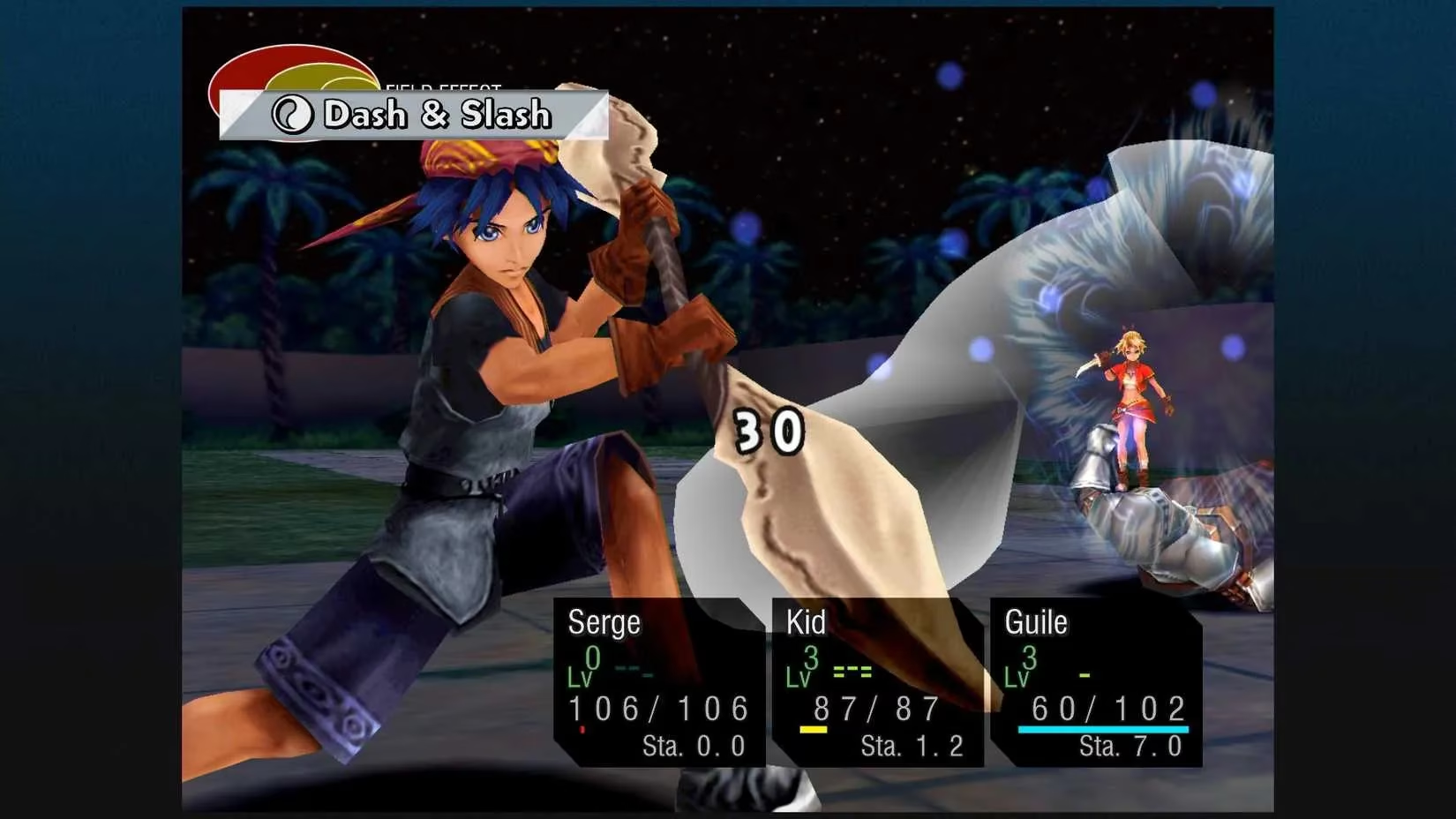
Then, there is Ryu from Breath of Fire III. He is, to me, the purest form of the silent protagonist. His journey is told not in words, but in the gradual straightening of his spine. As a child, his silence was punctuated by tears and a timid battle stance. After the time skip, that same silence was filled with the gravity of a man who understands his duty. The game asks only one choice of you at the end, but that choice is weighted with the entire silent journey. It is the culmination of watching a boy become a guardian, his silence growing from vulnerability into strength, like a tree's rings holding years of unspoken weather.
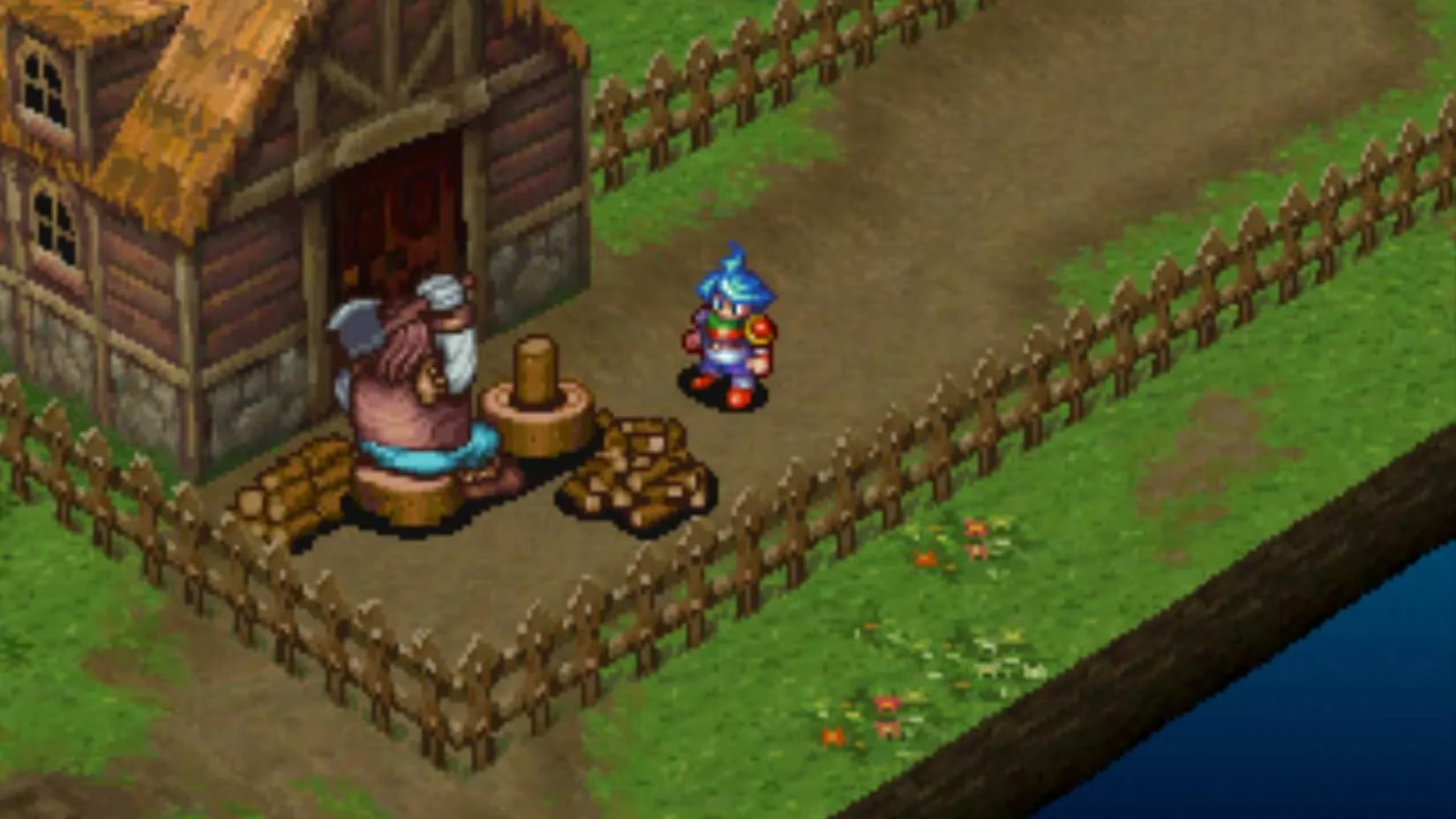
In the velvet shadows of Tokyo, Joker redefined silence as supreme style. In Persona 5, he is less silent and more selectively articulate. His few spoken lines (usually summoning Personas) are bursts of brilliant color on a mostly quiet canvas. His communication is in a raised eyebrow, a confident smirk, a flashy all-out attack animation. The Social Link system gives purpose to his player-driven dialogue options. Giving him a fixed, garrulous personality would break the spell. Joker's quiet is the confident stillness of a maestro before the orchestra plays; he leads by example, his actions composing a symphony of rebellion that his teammates give voice to. He is the silent beat around which the funky, rebellious music of the game finds its rhythm.
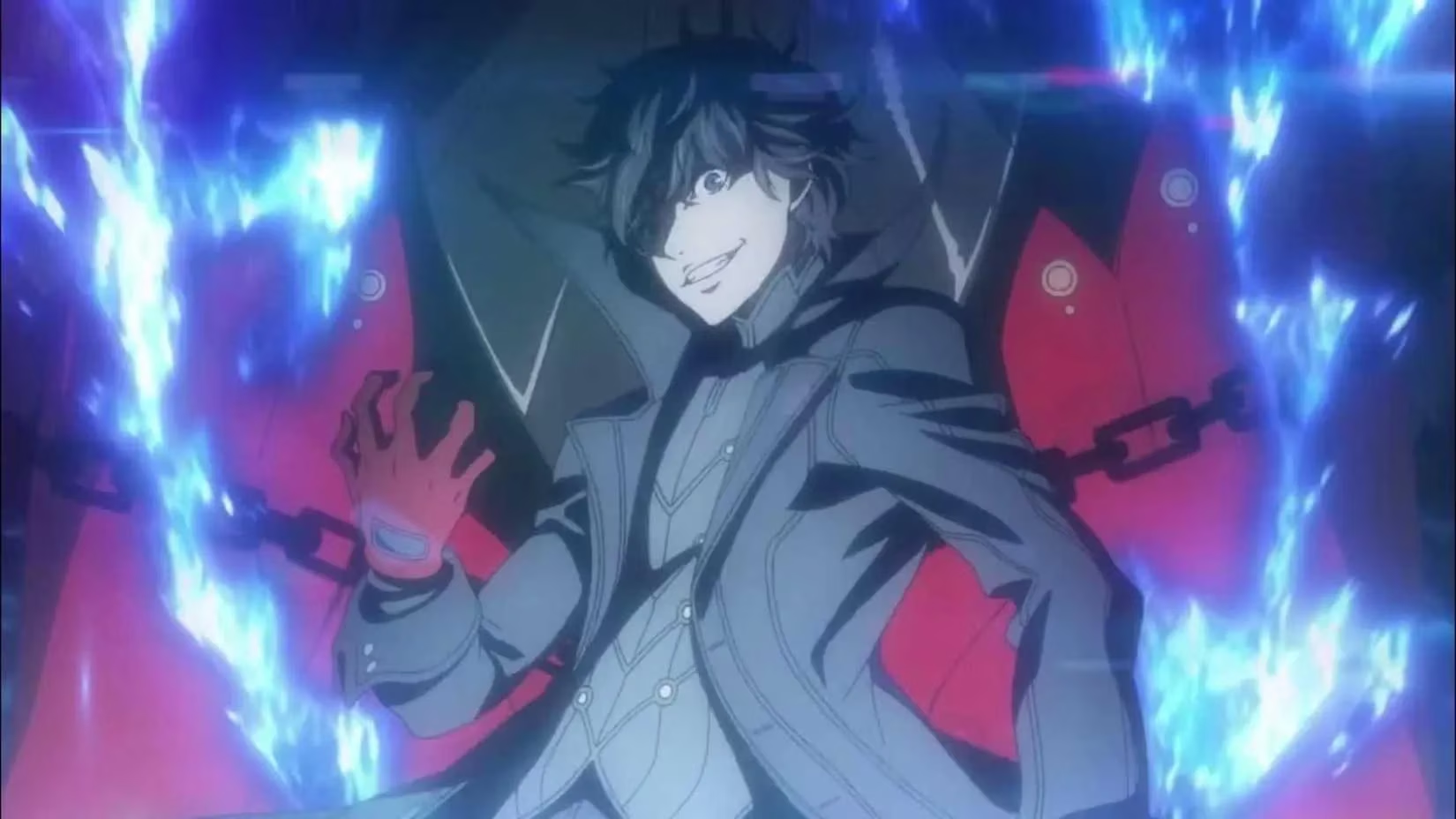
And finally, there is me. Or rather, us. The Warrior of Light in Final Fantasy XIV is the ultimate evolution. This is not a silent protagonist I watch; it is one I inhabit. Through years of expansions—through A Realm Reborn, Heavensward, Stormblood, Shadowbringers, Endwalker, and the sagas beyond in 2026—this silence became my own. The linear story is not mine to change, but it is mine to feel. When I stood before Emet-Selch, my silent character was a vessel for my own complex empathy and resolve. When I learned with Alphinaud or traded barbs (or rather, endured the barbs) of characters like Zenos, the reactions were my own. This silent hero is a kinetic portrait, its lines and colors defined by hundreds of hours of my journey. The bonds formed feel real because the vessel for them is, in part, my own consciousness. It is the only silence that has ever truly given me a voice.
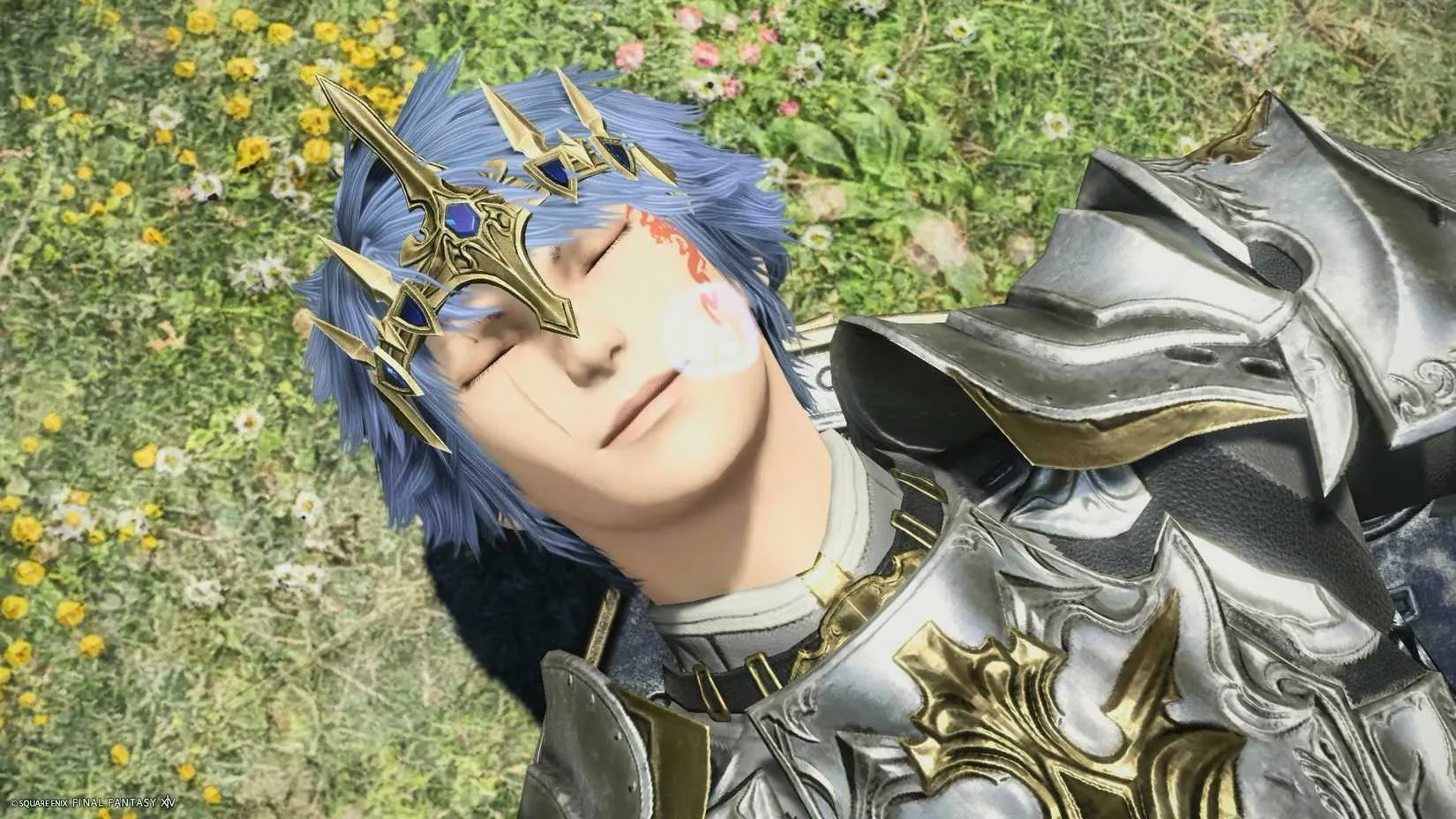
So, I recant my old hypocrisy. I do not dislike silent protagonists. I crave the specific magic they conjure. They are:
-
The Expressive Canvas: Where a glance holds a paragraph (DQVIII's Hero, Breath of Fire III's Ryu).
-
The Narrative Keystone: Where silence itself is a plot point (Serge, Rudy).
-
The Vessel for Self: Where quiet allows the player's heart to beat in time with the game's (Warrior of Light, Joker's chosen responses).
Their silence is not a failure of writing, but a different literary device. In a world noisy with exposition, they are the poignant pause, the meaningful glance, the action that speaks volumes. They are the quiet echoes in the cathedral of the JRPG, and sometimes, it is in the echo that we hear our own voice most clearly.
Comments