 PersonaGamer
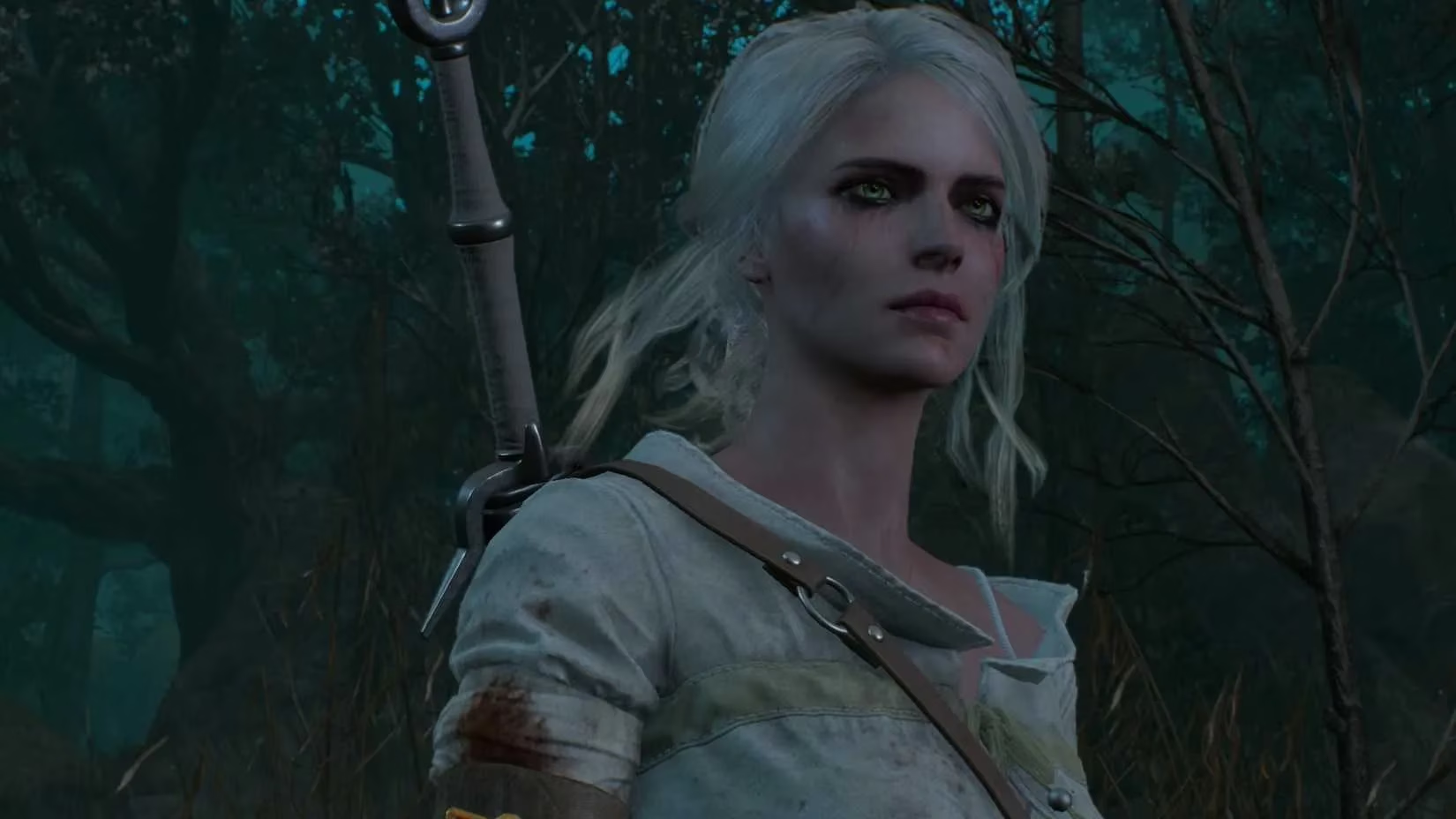
I remember the first time I realized I wasn't just playing a story—I was writing one with every seemingly insignificant choice. The snowball fight with Ciri felt like a moment of respite, a brief escape from the grim realities of the Continent. Little did I know I was participating in something far more profound than simple father-daughter bonding. This is where The Witcher 3 performs its narrative magic, creating a twist so subtle you don't even realize you're crafting it until the final pieces fall into place.
Persona 5's celebrated twist unfolds like a meticulously staged theatrical production. The game reveals it has been playing a second narrative atop the one I thought I was progressing—Joker's arrest, the traitor hiding within the Phantom Thieves' allies, a carefully orchestrated plan I unknowingly helped set in motion hours earlier. The Akechi confidant link becomes a trap I willingly enter, offering insight and camaraderie at precisely the moment when the team is most vulnerable. The more time I invest in him, the more devastating the eventual revelation becomes.
The interrogation framing device cleverly uses my own playthrough as fuel. Every choice I made leading up to Joker's arrest becomes part of the timeline the protagonist recounts. Persona 5 pulls the rug out from under me by using decisions from the narrative's very foundations. It's slick, ambitious, and rewarding—a twist that weaponizes perception and narrative structure with masterful precision. Yet, for all its brilliance, it remains a twist that happens to me, one I experience rather than fundamentally alter.
The Witcher 3 approaches narrative revelation differently. Its greatest twist isn't a single cinematic moment or applause-worthy reveal. Instead, it's a slow dawning realization that the final act has been quietly determined by subtle choices I made throughout the journey. Many of these didn't even appear to be turning points at the time.
The Silent Architects of Destiny:
-
Encouraging or discouraging Ciri without realizing the stakes
-
Allowing her to attend the Lodge meeting on her own
-
Comforting her after the battle of Kaer Morhen by joining that snowball fight
These moments felt like flavor scenes, emotional respites from the main narrative. I now understand they were actually the backbone of the game's ending. Each interaction determined whether Ciri felt supported, trusted, and strong enough to face her destiny. The game never highlighted their importance, never warned me, never telegraphed their significance.
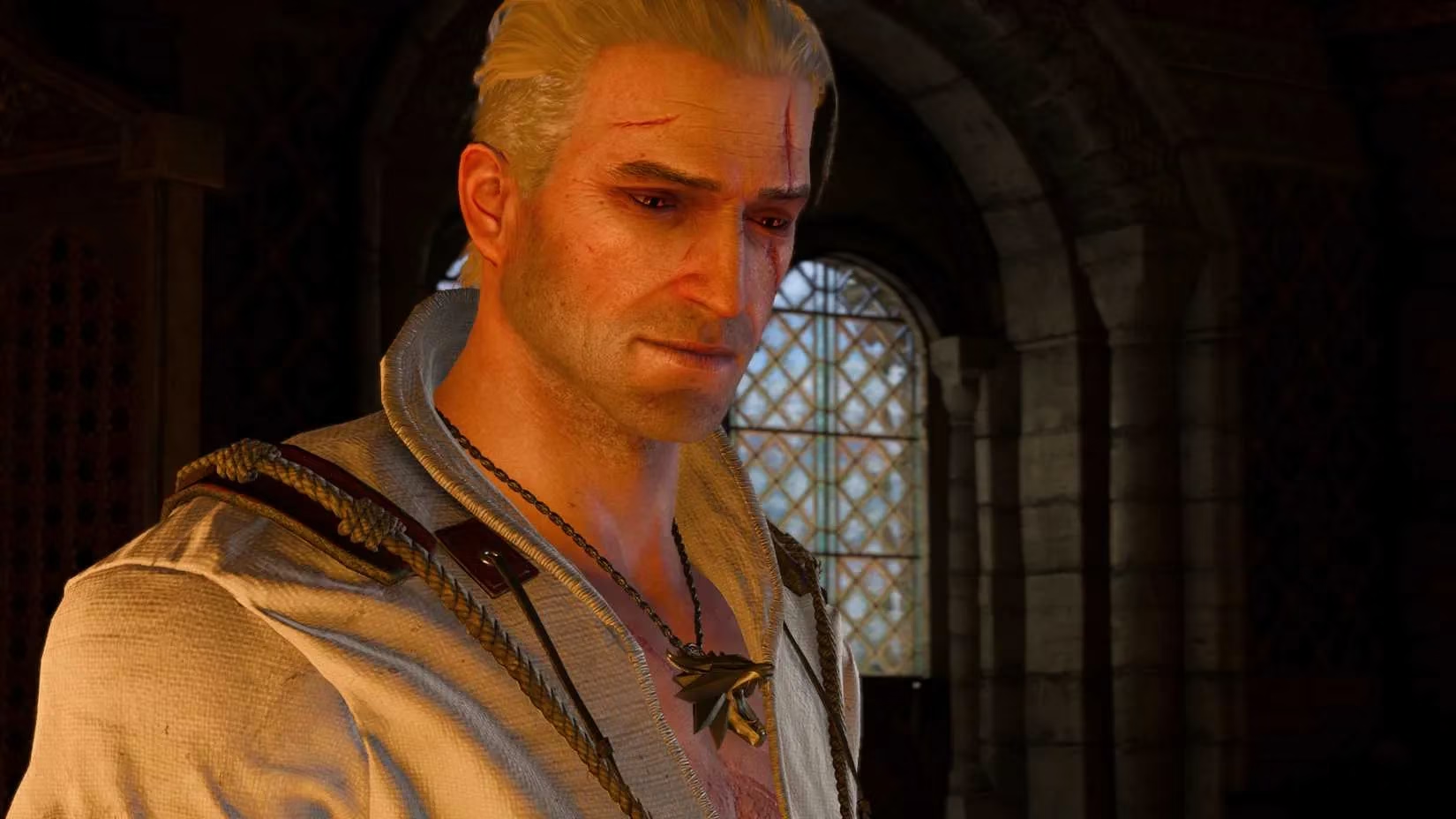
Meeting Emperor Emhyr presented as natural story progression rather than a crossroads moment. Many players, including myself, chose this path simply because it seemed like logical quest progression. But for Ciri, this meeting became a deeply personal referendum on autonomy and identity. My intentions mattered less than what the act symbolized—whether I was treating her as a pawn in political games or respecting her as an individual capable of making her own decisions.
The most profound revelation comes from treating Ciri as a witcher without knowing I'm deciding her future. The witcher ending isn't handed to players—it's earned by behaving as though Ciri already is a witcher: someone capable, self-directed, and part of the family. When I let her make her own choices, when I backed her instead of shielding her, I was unknowingly paving the path toward the life she would ultimately choose.
Where Persona 5 designs a surprise around the narrative, The Witcher 3 designs a surprise out of my actions:
| Aspect | Persona 5 | The Witcher 3 |
|---|---|---|
| Awareness | I participate in the twist | I unknowingly author the twist |
| Control | Limited to narrative engagement | Complete through behavioral choices |
| Revelation | Dramatic story moment | Personal realization |
| Impact | Changes how I see the story | Changes how I see my role in it |
Ciri's fate unfolds not because I followed narrative breadcrumbs, but because I played the game as I believed Geralt should behave. My version of Geralt—the one I lived through countless small decisions—determined her future. This is a twist only video games can deliver, but one that few ever attempt at this scale.
Persona 5's big reveal is unforgettable theater, but The Witcher 3's twist is unparalleled in how deeply, quietly, and personally the player becomes woven into the outcome. It's not just a twist I witness—it's one I unknowingly authored through compassion, trust, and instinct. The realization that I had been writing Ciri's story all along, through snowball fights and moments of quiet support, remains one of gaming's most profound narrative achievements.
In the end, both games master the art of the plot twist, but they achieve their magic through fundamentally different approaches. Persona 5 shows me how clever narrative design can surprise, while The Witcher 3 teaches me how my own humanity can shape destinies. One is a story I'll always remember; the other is a story I helped create, and that makes all the difference.
Comments