 PersonaGamer
As a lifelong fan of role-playing games, I've journeyed through countless fantastical realms, from the high-fantasy landscapes of ancient epics to the neon-drenched corridors of distant galaxies. Yet, some of my most memorable digital adventures haven't been in wholly invented worlds, but in meticulously recreated slices of our own. There's a unique thrill in exploring a virtual city that mirrors a real one, a feeling of being both a tourist and a protagonist. It blurs the line between game and travelogue, offering a sense of place that pure fantasy sometimes can't match. In 2026, this trend of grounding epic stories in real-world locations feels more immersive than ever, thanks to advances in environmental detail and world-building.
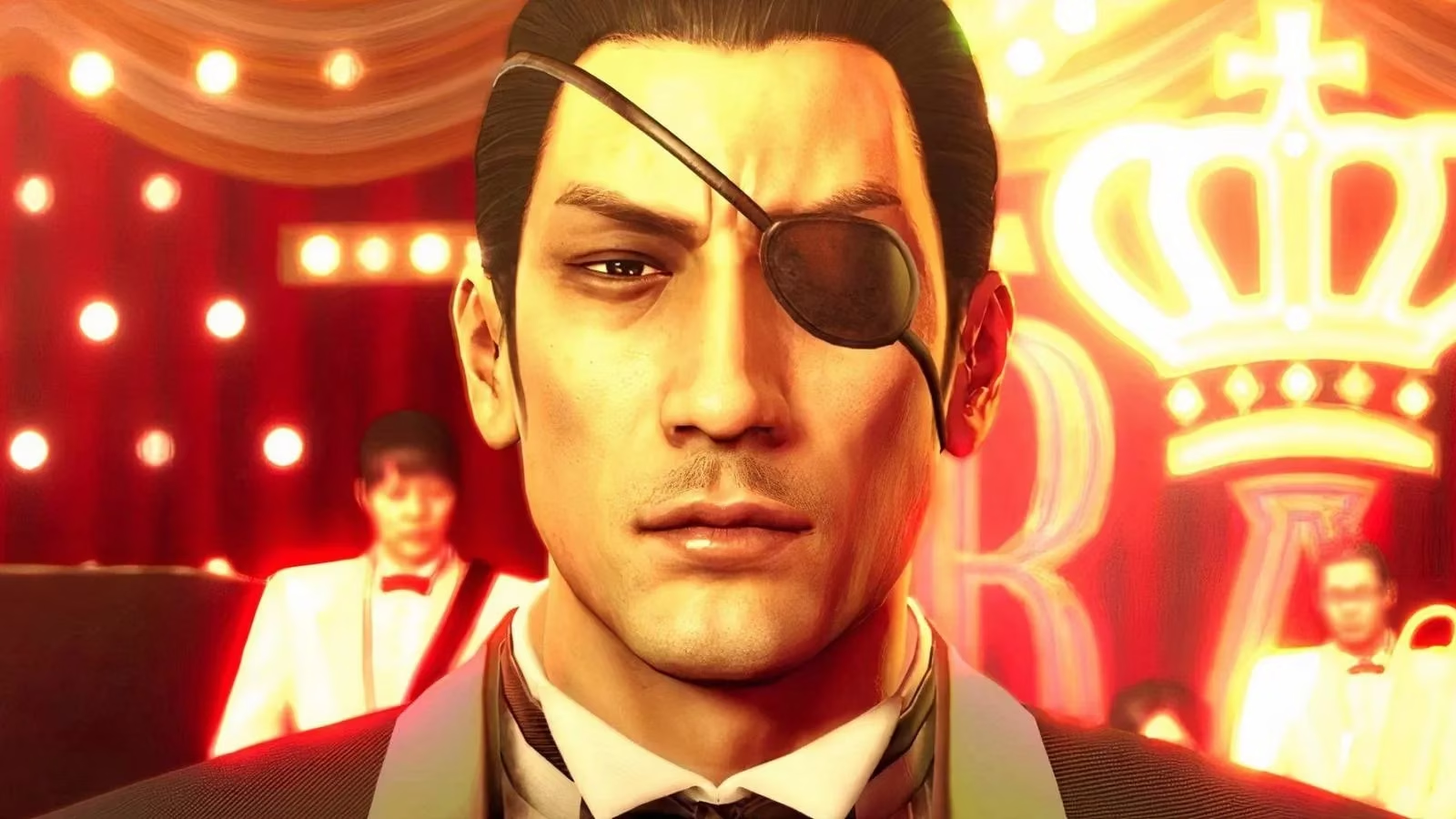
My journey into these virtual cities arguably began with a masterpiece: Yakuza 0. This wasn't just a game; it was my first virtual trip to Japan. Controlling the young Kazuma Kiryu and Goro Majima in their origin stories was gripping, but the true star was the setting. The districts of Kamurocho and Sotenbori were more than backdrops; they were pulsating, living characters. I spent hours just wandering, soaking in the atmosphere. 🏮 The accuracy with which these locations mirrored Tokyo's Kabukicho and Osaka's Dotonbori was staggering. From the glowing pachinko parlors and smoky ramen stalls to the bustling streets filled with quirky substories, it felt authentic. This attention to detail did more than just look pretty—it rooted the over-the-top, dramatic yakuza narrative in a tangible, believable world. The authenticity made every heat action and emotional story beat hit harder.
Not all real-world RPG settings are pristine, of course. The Division 2 presented a hauntingly different kind of tour: a loot-driven expedition through a ruined Washington, D.C. In 2026, revisiting this game's rendition of the capital feels eerily poignant. Ubisoft's environmental craft was on full display here. I remember navigating the overgrown National Mall, fighting through the crumbling ruins of government buildings, and setting up operations in fortified safe houses. The gameplay loop of improving my gear and tackling challenging enemies was solid, but it was the setting that sold the fantasy. The PvP in the Dark Zones was especially tense because the familiar, broken landmarks made the conflict feel immediate and desperate. It was a powerful reminder that open-world design isn't just about size, but about creating a place that tells a story even when you're not on a mission.
The ultimate blend of mundane life and supernatural adventure, for me, has to be Persona 5. While earlier Persona games used fictional towns, Persona 5 proudly and unapologetically plants you in the heart of Tokyo. By day, I was a regular high-school student navigating the slice-of-life rhythms of the city: attending class, working part-time jobs, hanging out with Confidants in Shibuya, and shopping in Shinjuku. 🎭 Then, at night, I'd dive into the Metaverse as a Phantom Thief, battling the distorted desires of corrupt adults. The genius was in how the two halves connected. Exploring the real Tokyo's iconic districts made the stakes of the supernatural heists feel personal. I wasn't just saving an abstract world; I was fighting for the very city I rode the subway through every afternoon. The contrast between the vibrant, everyday Tokyo and the surreal, symbolic Palaces created a narrative tension that few other games have matched.
The Yakuza series (now Like a Dragon) continued to be my go-to for virtual tourism, and Like a Dragon: Infinite Wealth took it to a new level in 2026. It built on the excellent turn-based foundations of Yakuza: Like a Dragon and brought back the legendary Kiryu. Familiar locations like Kamurocho and Isezaki Ijincho (based on Yokohama's Isezakicho) were back and more detailed than ever. But the real game-changer was Honolulu, Hawaii. The developers made no attempt to disguise it; this was a loving, vibrant recreation of Waikiki and its surroundings. Exploring this sun-drenched paradise with Ichiban Kasuga was a joy. From the bustling beachfront to the quiet backstreets, it was a perfect vacation within a game, full of absurd side activities and heartfelt stories. The juxtaposition of Japan's dense urban canyons with Hawaii's open tropical vistas showed the incredible range of this series' world-building.
Sometimes, the charm of a virtual city comes from its rough edges and palpable atmosphere, which is certainly true for the cult classic Vampire: The Masquerade – Bloodlines. Even playing it today, its vision of a gritty, early-2000s Los Angeles is unforgettable. The game's budgetary constraints are visible—the hub world shrinks noticeably as you progress, and areas like Chinatown feel smaller and less detailed. Yet, the atmosphere is thick enough to cut with a knife. 🧛♂️ Santa Monica's beachfront and seedy bars, Downtown's imposing skyscrapers, and Hollywood's faded glamour were perfect backdrops for a story of vampiric politics and personal horror. The limitations almost added to the charm, making LA feel like a series of haunting, intimate stages rather than a seamless open world. It proved that a compelling sense of place isn't solely about graphical fidelity or scale, but about mood, writing, and cohesive design.
For a more dystopian and vertical take on a real city, I often think of Deus Ex: Mankind Divided. While the game's narrative felt truncated, its central hub—a cyberpunk-inspired Prague—remains one of the most fascinating urban spaces I've ever explored in a game. The verticality was a revelation. I wasn't just walking the cobblestone streets; I was using my augmentations to climb fire escapes, leap across rooftops, and vent-crawl through apartments. The city changed between day and night, with different secrets and conversations to uncover. Brief missions also took me to dystopian versions of Dubai and London, offering stark contrasts to the cramped, politically tense streets of Prague. It was a masterclass in using level design to encourage exploration and make a city feel truly multi-layered.
Finally, returning to the streets of Kamurocho from a new perspective was the delight of Judgment. As disgraced lawyer-turned-detective Takayuki Yagami, I was on the side of the law for once. While Yagami didn't quite have the infectious charisma of Kiryu or Ichiban, the game doubled down on what makes these locations great: lived-in detail and endless activity. Investigating cases had me tailing suspects through familiar alleyways, but I also found time for drone races in the backstreets, goofy substories, and even going on dates. It was the same Kamurocho, but it felt fresh because I was interacting with it differently. It proved that a compelling real-world setting can support multiple genres and stories, becoming a versatile stage for human drama, whether it's epic yakuza wars or intimate detective noir.
| Game | Real-World Location | Why It Works |
|---|---|---|
| Yakuza 0 | Kabukicho, Tokyo & Dotonbori, Osaka | Unmatched authenticity & atmosphere that roots the dramatic story. |
| The Division 2 | Washington, D.C. | A haunting, ruined backdrop that enhances the loot-shooter survival fantasy. |
| Persona 5 | Tokyo, Japan | Perfectly blends mundane student life with supernatural rebellion. |
| Infinite Wealth | Various Japan sites & Honolulu, Hawaii | Expands the virtual tourism with a vibrant, tropical open world. |
| Vampire: Bloodlines | Los Angeles, California | Atmospheric, moody hubs that sell the Gothic-punk horror despite technical limits. |
| Deus Ex: Mankind Divided | Prague, Czech Republic | Incredible verticality and a dystopian cyberpunk makeover. |
| Judgment | Kabukicho, Tokyo | Recontextualizes a familiar city through the lens of a detective drama. |
In 2026, the power of these virtual cities remains undimmed. They offer more than just pretty scenery; they provide context, culture, and a grounding sense of reality for our most outlandish digital adventures. They allow me to be a tourist, a hero, a student, and a detective, all from my living room. For a player like me, that's the real magic of the RPG genre—its ability to transport you not just to another world, but to another version of our own, filled with stories waiting to be uncovered on every virtual street corner.
Comments