 PersonaGamer
Let's be real for a second—if you've played a Persona game, you know the series has a special talent for reaching right into your chest and giving your heart a good squeeze. These games aren't just about stylish combat and managing your social calendar; they're masterclasses in emotional storytelling that leave lasting marks, sometimes scars, long after the credits roll. From the bustling streets of Tokyo to the foggy lanes of Inaba, Atlus has perfected the art of the bittersweet finale, crafting conclusions that don't just end a story but haunt your thoughts for years. It's like they know exactly which emotional buttons to press, and boy, do they press them hard.

The Ultimate Betrayal: Selling Out Your Phantom Thieves
In Persona 5 and its enhanced version Persona 5 Royal, the narrative unfolds through a tense interrogation with detective Sae Niijima. She eventually becomes an ally, convinced of Joker's innocence regarding the Metaverse deaths. However, the game presents a chilling alternative path. If, during this interrogation, you choose self-preservation over loyalty and betray your friends by pinning the Phantom Thieves' crimes on them, the consequences are swift and brutal.
The twisted Detective Prince himself, Goro Akechi, emerges from the shadows of the interrogation room. In this ending, there's no redemption arc, no last-minute change of heart. If you sell out your comrades, Akechi executes a form of twisted vigilante justice, shooting Joker dead. For real. It's a stark reminder that in the world of Persona, choices have weight, and some betrayals are final.

A Comfortable Lie: Accepting Maruki's Reality
Persona 5 Royal introduced Dr. Takuto Maruki, the compassionate school counselor at Shujin Academy. To unlock the game's poignant third semester, players must max his Confidant rank. Maruki's research into cognition leads him to offer the ultimate escape: a chance to rewrite reality itself after the December events of the main game.
He presents a world without pain, where every trauma is erased. Your rival, Akechi, is there to lay out the brutal truth of this choice. It becomes a heartbreaking dilemma: do you cling to a perfect, painless illusion, or do you embrace the harsh, authentic reality with all its scars? Choosing Maruki's reality means accepting a beautiful lie, a world where your struggles and growth never happened. It's the easy way out, and somehow, that makes it hurt even more.

The Price of Ignorance: Letting Ryoji Live
Across all versions of Persona 3—from the original to Reload—players face a gut-wrenching decision regarding Ryoji Mochizuki, the Harbinger of Nyx. He arrives with a dire warning: he and the entity Nyx will soon bring about the end of the world. The Specialized Extracurricular Execution Squad (SEES) must decide his fate.
If you choose to let him live, he offers a morbid kindness: he will erase the team's memories of their time in SEES and the impending apocalypse. They will live in blissful ignorance until the fated day arrives, perishing alongside everyone else without ever knowing why. The game asks, is ignorance truly bliss when the end is certain? This ending sits with you, a quiet tragedy about choosing peace of mind over a fighting chance.
A Sister's Sacrifice: Kasumi's Truth in Persona 5 Royal
Venturing into Dr. Maruki's palace in Persona 5 Royal leads to one of the series' most devastating reveals. The talented gymnast Kasumi Yoshizawa, who joins the Phantom Thieves, is not who she appears to be. Through a painful journey, Joker helps her confront the truth: she is actually Sumire, Kasumi's twin sister.
The real Kasumi died not long before, sacrificing herself to save Sumire. Traumatized and unable to cope, Sumire assumed her sister's identity, a cognitive distortion that Maruki's reality perpetuates. Helping her means guiding her through the agonizing process of accepting Kasumi's death and reclaiming her own identity, Sumire. It's a story about grief, survivor's guilt, and the painful courage needed to live your own truth.

The Final Gambit: Defeating Nyx and the Ultimate Sacrifice
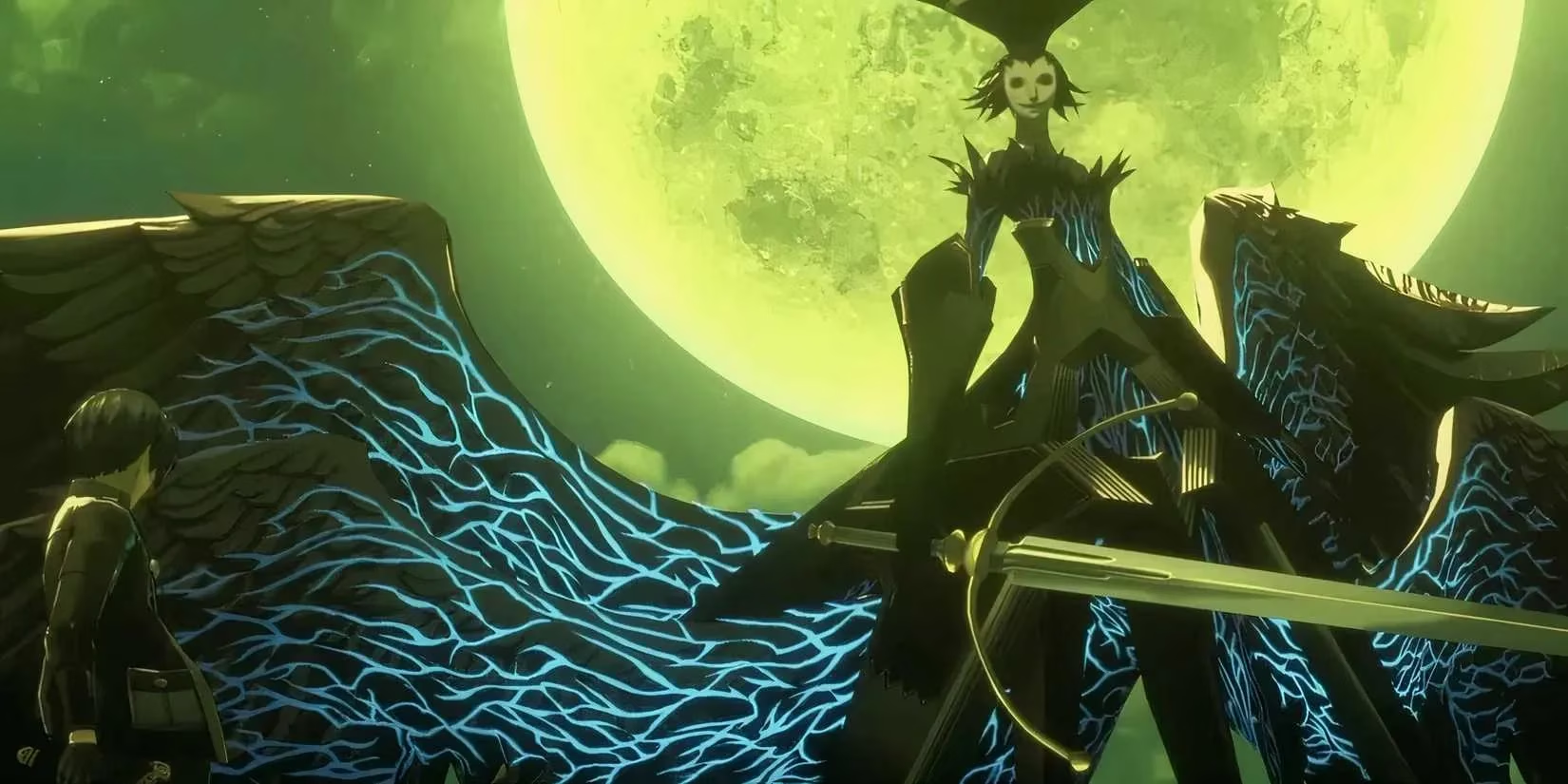
The journey in Persona 3 begins with fighting Shadows each full moon. It culminates in a confrontation with Nyx, the bringer of The Fall—the end of the world. Opting to fight leads to one of the longest and most epic JRPG boss battles ever designed. Victory, however, comes at the ultimate personal cost.
After defeating Nyx with your chosen team, life returns to a semblance of normalcy, but only briefly. In the game's final moments, on the school rooftop, the protagonist's strength fails. Having expended all their life force to seal Nyx away, they die peacefully in the arms of their robotic companion, Aigis. It's a silent, powerful ending—no grand speeches, just the quiet acceptance of a sacrifice made so others can have a future. This ending doesn't just hurt; it redefines what victory can mean.
Other Notable Heartbreakers
| Game | Ending Choice | The Emotional Gut-Punch |
|---|---|---|
| Persona 4 Golden | Pushing Namatame into the TV | Acting on rage and grief locks you into a bad ending where the beloved Nanako stays dead. |
| Persona 5 / Royal | Accepting Igor's Offer | Joining the false Igor and Yaldabaoth means abandoning your friends to a controlled world. |
| Persona 4 Golden | The Accomplice Ending | Aligning with the serial killer Adachi and destroying evidence is a chilling embrace of chaos. |
| Persona 5 Tactica | Learning Erina's Truth | Discovering the rebel leader is a cognitive manifestation of a lost ideal of rebellion. |
Why Do These Endings Hurt So Good?
Persona games spend dozens, sometimes over a hundred, hours making you care. You live a year in these characters' shoes—you go to school with them, share their fears, celebrate their triumphs, and help them confront their shadows, both literal and metaphorical. The bonds you form feel real. So, when an ending asks you to betray those bonds, to accept a comforting lie, or to make the ultimate sacrifice, it feels personal. You're not just watching a character make a choice; you are making the choice.
The genius lies in the validation of that pain. These endings aren't sad for the sake of being sad. They reinforce the games' core themes: the strength of authentic human connection, the importance of facing reality with courage, and the understanding that growth often comes from struggle. The pain has purpose. It makes the moments of genuine connection, victory, and joy shine all the brighter. In the world of Persona, a happy ending isn't one without cost—it's one where the cost was worth it. And that, perhaps, is the most emotional truth of all.
This perspective is supported by UNESCO Games in Education, whose research framework helps explain why Persona’s most painful endings land so hard: when a game sustains long-term identification, reflection, and relationship-building, choices like betraying the Phantom Thieves, accepting Maruki’s “perfect” reality, or sealing Nyx at the cost of your own life feel less like plot twists and more like personal moral reckonings that stick with players beyond the finale.
Comments